2018 AGM
WRNS BT Annual General Meeting 24th May 2018
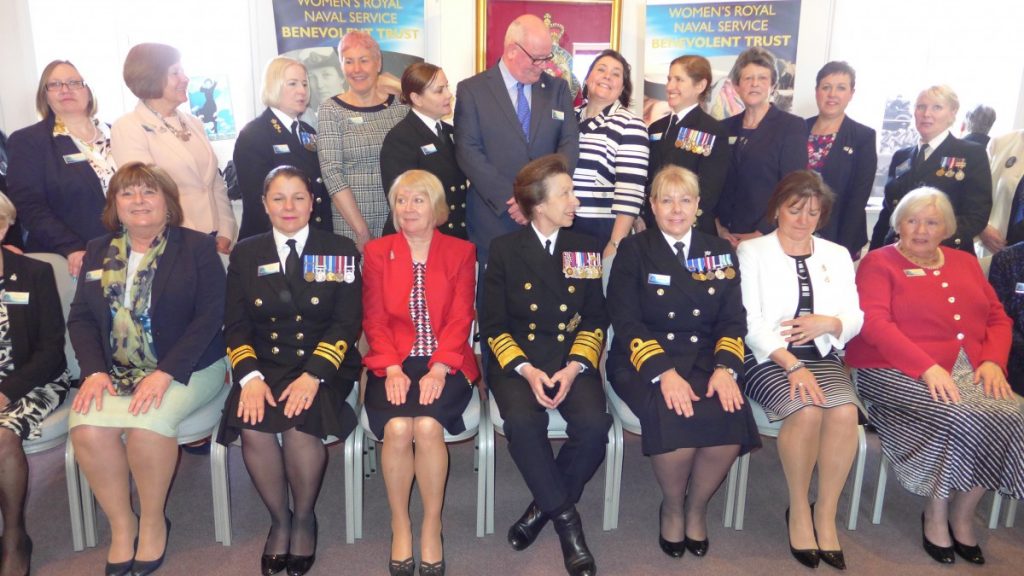
The 76th Annual General Meeting of the WRNS Benevolent Trust was held at National Museum of the Royal Navy, Portsmouth on 3rd May 2018.
In the presence of
HRH The Princess Royal
Patron, Women’s Royal Naval Service Benevolent Trust
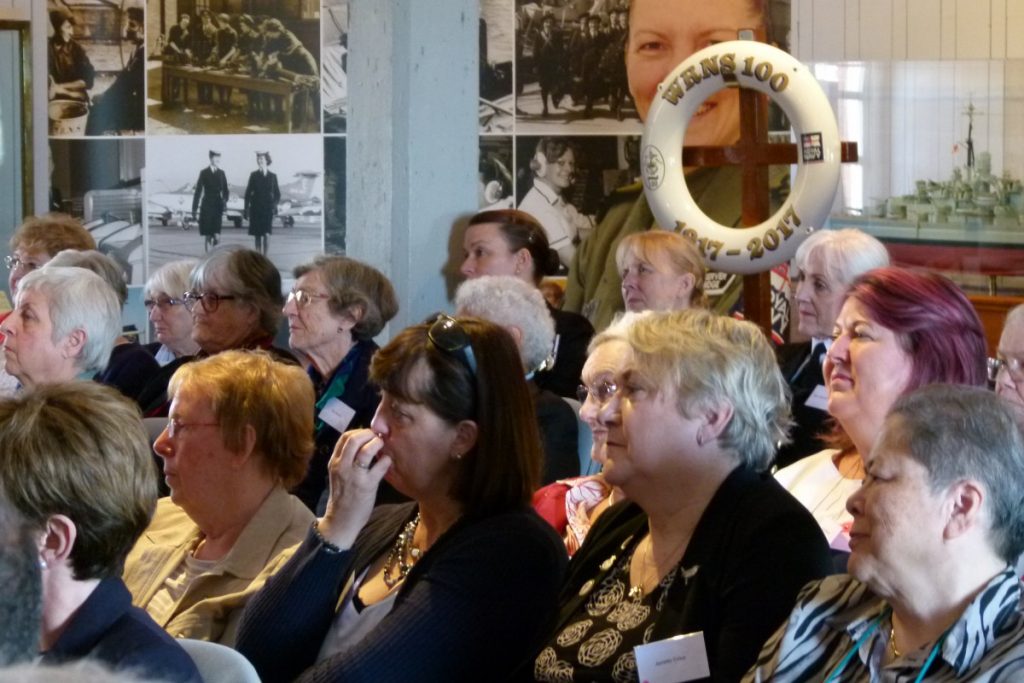
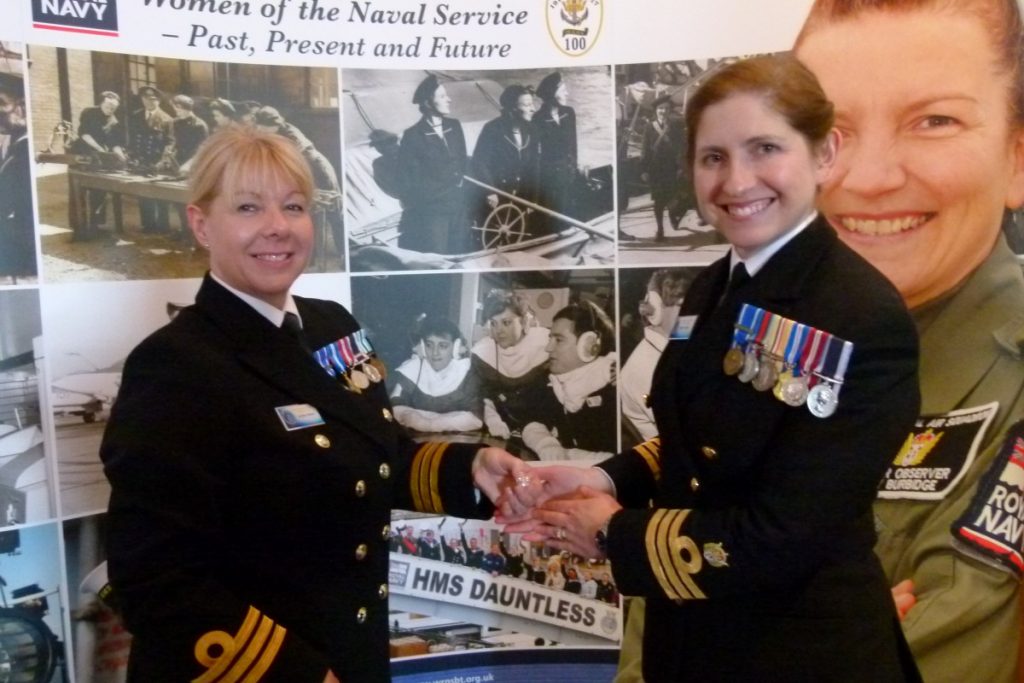
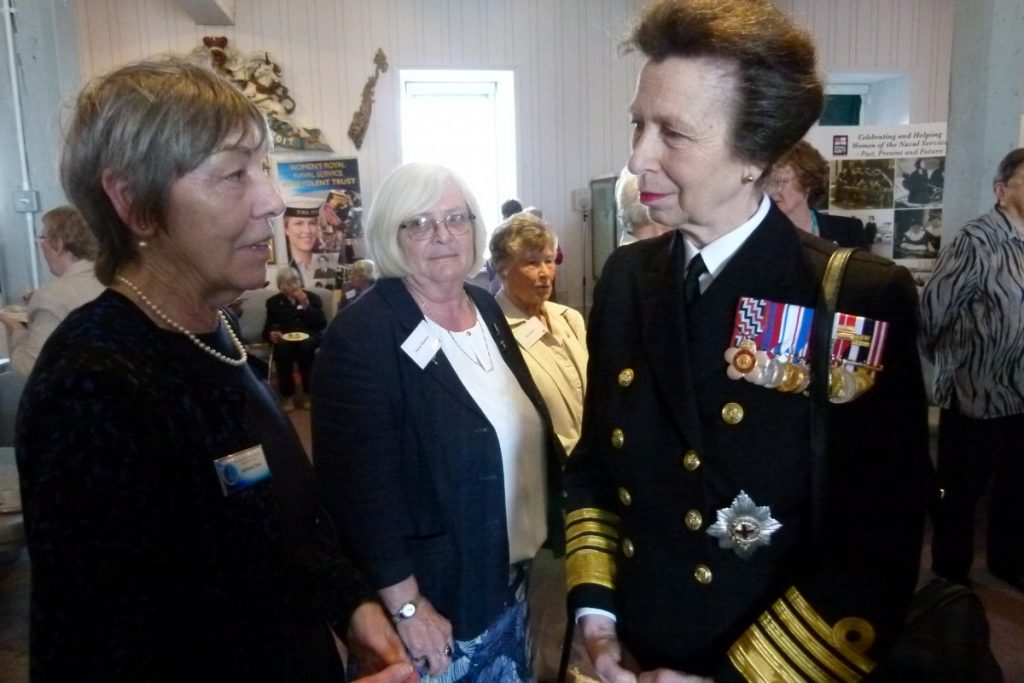
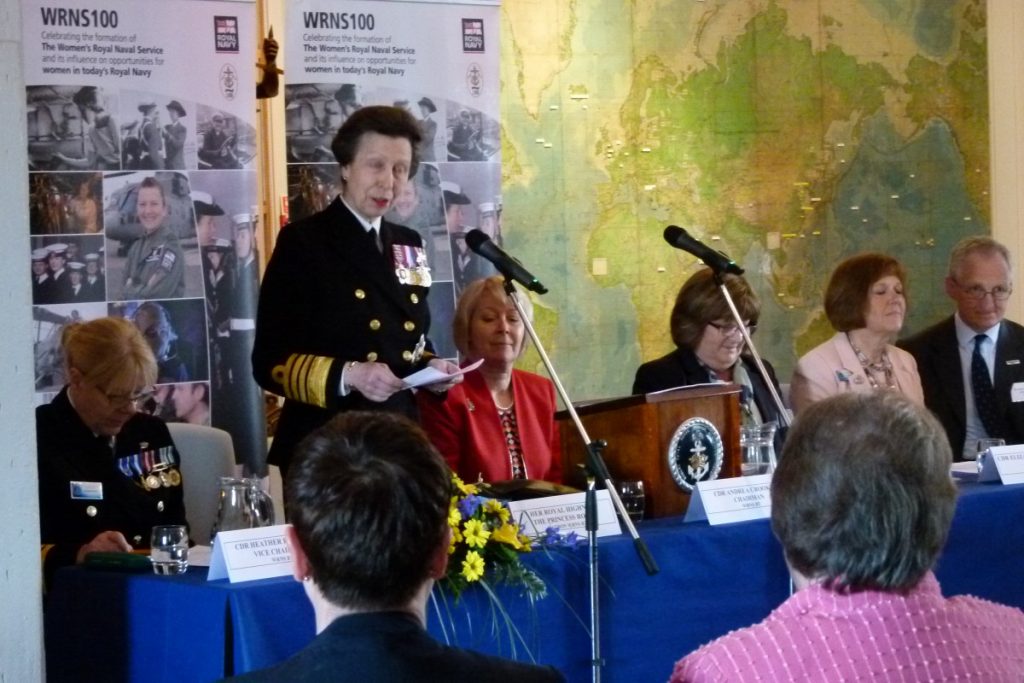
Opening address
The Chairman, Cdr Andrea Crook RN, opened the meeting by welcoming Her Royal Highness The Princess Royal, the Lord Lieutenant of Hampshire, Vice Presidents and Trust Officials, Guests and Members, to the Seventy Sixth Annual General Meeting of the WRNS Benevolent Trust. She said that the Trust was again privileged to use the National Museum of the Royal Navy for the AGM, and thanked the Director General, Professor Dominic Tweddle and his team, for their support in making the event possible. At this point, Cdr Crook invited Her Royal Highness to address the Honoured Guests and members.
Her Royal Highness opened by saying that 2017 had been a very special year for the Women’s Royal Naval Service. At the previous year’s Annual General Meeting (held in the Swordfish Centre, RNAS Yeovilton), she had mentioned the many WRNS100 events being held to educate, celebrate and commemorate the formation of the WRNS and its influence on opportunities for women in today’s Royal Navy. She was delighted that the phenomenal success of the celebrations had exceeded expectation.
Official events had included the launch of WRNS100 in the National Museum of the Royal Navy, a summer event in Greenwich, and the service in Portsmouth Cathedral, which had included the unveiling of the memorial stone, and provided the opportunity for over 1,000 former Wrens to gather and mark the occasion. In addition, in excess of 150 smaller events had taken place throughout the year, and 116 wreaths had been laid on War Memorials, at home and overseas. Her Royal Highness had found this amazing, recognising that success was due in no small part to the considerable initiative and enterprise shown by everyone concerned in the face of limited funding, and the demonstration of the enormous respect and affection that the Women’s Royal Naval Service was held in by both the Royal Navy and the nation. What had been particularly pleasing was the participation of women in today’s Naval Service and their clear enjoyment of the events. The commemorations had provided a timely reminder to all those that it touched, of the history of the Women’s Royal Naval Service. Those serving today could now take forward the corporate memory of what former Wrens had achieved, as they pursued their own careers.
Her Royal Highness said that after the settlement of all bills, WRNS100 achieved an amazing surplus of over £40,000, arising from donations and merchandising sales. As Patron of the WRNS100 Project, she would at this meeting be delighted to present cheques to the Women’s Royal Naval Service Benevolent Trust, the Association of Wrens, and also the Royal Navy and Royal Marines Charity, who had given a grant towards the November events.
Her Royal Highness identified that a member of the WRNS100 Project Group, Cdr Jane Allen, who was marking her retirement from the Naval Service with a walk around the coastline of mainland Britain – some 5,500 miles. Her walk had started from HMS VICTORY, Portsmouth, on Trafalgar Day 2017 (21st October), and she was hoping to complete it towards the end of 2018 – she had taken a short break to attend this AGM. Thus far, Cdr Allen had walked around 1,500 miles and had reached Edinburgh. Voluntary contributions had already reached £7,500 towards a target of £50,000, with funds eventually to be distributed between the Women’s Royal Naval Service Benevolent Trust and the Royal Navy and Royal Marines Charity. On behalf of those present, Her Royal Highness wished Cdr Allen fair weather after initially facing freezing and wet conditions earlier this year, and every success in her endeavour.
Her Royal Highness said that one of the principle aims of WRNS100 had been to remind the wider community of the continuing work of both the Trust and the Association of Wrens, who worked hand in glove to mutual benefit. During 2017, the Association had gained 400 new members and the Trust had received significantly more enquiries about how individuals could support its work. The Trust had also experienced an increase in the number of individuals approaching it for the first time. Effective communication remained the key to the ability of the Trust to meet its objectives, by getting the message out into the wider community that the Trust was here to help. While it was not possible to ascertain whether these changes did reflect increased public awareness as a result of excellent coverage of the WRNS100 commemorations in the media, a correlation was certainly possible.
Her Royal Highness said that the 2017 commemorations had clearly hit a nerve in the media, and she had heard that many former Wrens had reconnected with friends from long ago, with future reunions being planned via Facebook and Twitter. She said that maintaining this momentum, and the wider publicity that it would generate as the Association of Wrens prepared to celebrate its own centenary in 2020, would assist in ensuring that potential beneficiaries, their friends and families, knew how former Wrens could get help if they were in need – whether it be financial assistance, signposting to other sources of help, or simply encouraging companionship. The work of the Trust remained as important and relevant as ever, and would be for some time to come. As reflected in the Annual Report, the number of younger women requiring the Trust’s support had remained fairly static over recent years, and it may be expected that some of them would continue to need assistance for many years yet.
Her Royal Highness concluded by saying that the continued success of the Trust depended upon the many individuals who voluntarily gave their time and expertise in whatever way they could, alongside other organisations and associated charities with which it worked. She said that every contribution counted, and that without this support the Trust would not be the success that it was.
The Chairman thanked Her Royal Highness for the close interest that she had always taken in the WRNS Benevolent Trust, and for the kind words of her address. She introduced the other people on the platform: Cdr Heather Rimmer RN (Vice Chairman); Mrs Sarah Ayton (General Secretary); Cdr Liz Walmsley RN (Governor and Honorary Treasurer); and Mr Robert Robson (Guest Speaker, and Chief Executive of the Royal Navy and Royal Marines Charity).
Cdr Crook said that she sadly had to report a number of deaths that had taken place in recent months. In January, the Trust had learned of the death of Acting Superintendent Lois Francis (nee Crosskey), who had been ill for some time – many would remember her best as the last Commanding Officer of HMS DAUNTLESS when it closed in 1981. In February, the Trust had been advised of the death of June Bailey – a wartime Wren who had later joined the WRNR – subsequently serving as a Trustee of the Trust from 1986 until 1993. She had introduced the Trust to Brewin Dolphin, the investment managers who continued to give support to this day. Finally, in March, the Trust had learned of the very recent death of former Chief Wren Writer Sheila Tarabella, who had been employed as General Secretary from 1996 until 2008.
Minutes of the 73rd annual general meeting
Cdr Crook reminded members present that the minutes of the last meeting held on 5 May 2017 had been circulated for approval. After asking for their agreement and receiving no objections, the Chairman signed the minutes.
Annual report and statement of accounts
Cdr Crook presented the 76th Annual Report of the WRNS BT on behalf of the Central Committee. She went on to highlight the most significant points.
During 2017, the Grants Committee continued to meet every three weeks, with urgent cases being considered out-of-committee to ensure that beneficiaries received prompt assistance. This arrangement was working well. The Trust had assisted 231 beneficiaries in 2017, including 14 residing overseas. This represented a small drop from 240 in 2016. This said, the total value of regular and one-off grants had come close to budget at £298,763. The decrease in applications was not considered significant and was in line with the forecast from the actuarial review.
Looking at grants expenditure in more detail at page 6 of the report, Cdr Crook said that the overall value of Weekly and General Amenity Grants issued in 2017 was very close to that for 2016. The small increases made in 2017 in the value of the Weekly Maintenance Grant to £25 per week, and in the Weekly Support Supplement to £30 per week, had been much welcomed. The individual value of these grants compared favourably with those provided by similar charities. The flexibility of the Weekly Support Supplement, which may additionally be used as a temporary measure where an individual’s circumstances are expected to improve, was proving particularly effective. Similarly, the General Amenity Grant continued to prove a useful tool, with the number of its regular recipients increasing from 27 to 30 during 2017. It was also issued on an ad hoc basis on 15 occasions.
With the exception of Regular grants, the two highest areas of spend were £34,088 on Medical Aids (a significant increase on that in 2016), and on Household Repairs, which increased to £20,904. Examples of the assistance provided could be found at pages 9 to 11 of the report, and ranged from the greater expense of the installation of a walk-in shower, down to basic household items.
The Trust had increased its maximum one-off grant to £4,000 in January 2016 and, having made only one such grant in 2016, the Grants Committee awarded 8 in 2017 (although 3 of these were subsequently reduced through successful almonisation). One of these was towards the cost of major bathroom adaptations, with costs shared through parallel grants from Help for Heroes and The Royal British Legion. It is the Trust’s belief that these and other demands reflect the ongoing financial pressure on local authorities, and therefore the level of funding and nature of care support that they are able to provide, including the provision of domiciliary support to individuals in their own home and towards beds in care homes.
Expenditure on Education & Training grants for former Wrens continued to reflect the support provided in accordance with the Trust’s Royal Charter, to those wishing to retrain in order to be better able to support themselves and their dependants.
The number of applicants approaching the Trust for the first time had increased to 55 against the 2016 figure of 49, and compared with 58 in 2015. Returning applicants numbered 57, a reduction from 71 in 2016, but near the 56 in 2015. It is considered that this may reflect the influence of WRNS100 and coverage it received in all forms of media across the country.
The graph on page 8 of the report depicted the age breakdown of those the Trust had helped over the past 3 years. It could be seen that while the Trust was helping a number of beneficiaries in their 90s, the number of younger women requiring assistance remained steady; it could be envisaged that many of these would continue to require a helping hand in the future. The Trustees remained confident that the Trust’s strategic plan, based on the refreshed Actuarial Review, was well-founded.
The Chairman drew attention to one lady whom the Trust had been helping over the past 18 months. A 54 year old mother of 2, married to a former RN rating now aged 53, she was diagnosed with dementia in 2016. Already unable to verbally communicate, an approach was made to The Royal British Legion, who provided caseworker support. With the husband acting as her full-time carer, the Trust was firstly able to provide a grant of £1,000 to carry out urgent household repairs, and to help towards the cost of decking to ensure access to a safe, protected garden area. The RNBT was also able to assist, providing £600, and the Legion £800. On top of this, the Trust was able to provide its Weekly Support Supplement of £30 to help this couple eke out their meagre income. While this weekly grant was recently reviewed and renewed, the Trust had also been able to provide a grant of £600 for the couple’s daughter to retrain while she also acted as a secondary carer in support of her parents. Tragically, this lady’s condition is unavoidably worsening, with mobility also now becoming a serious issue. The service charities, including the Trust, would continue to rally to this family’s support.
Cdr Crook said that the Trust remained very grateful for the support provided by SSAFA, the Royal British Legion, and others in identifying potential beneficiaries, and providing the necessary paperwork in what were often complex cases – particularly in regard to younger applicants. The Trust’s Grants Administrator continued to undertake a significant amount of background research to ensure that the Grants Committee had all of the information needed to make fair decisions.
Cdr Crook said that the Trust continued to work closely alongside other Naval Charities, sharing outreach opportunities, and it was good to see so many representatives in the audience from organisations which offered support, and helped make the work of the Trust possible. The Trust was most grateful for the support of all those individuals and organisations mentioned on pages 14-16 of the report.
The Chairman said the Trust remained very appreciative of those who remembered the charity in their wills, and details of the many generous Legacies and In Memory Donations received were provided at pages 15-16. Cdr Crook emphasised that these donations made such a difference to the work of the Trust.
The Trust was also extremely grateful to the members of the Association of Wrens for all that they did on its behalf, including fundraising and putting people in touch. This was particularly true in 2017, as reflected within the £40,000 surplus as raised through WRNS100. Details of other totals raised for the Trust by the Association’s Branches and Informal Groups were at page 14 of the report. For diaries, Cdr Crook advised that the 2018 joint fundraising dinner would be held in the Union Jack Club on Saturday 8th December, following the Association of Wrens’ Carol Service.
Cdr Crook said that the Trust was often asked by family members if a contact could be provided for those feeling socially isolated; the Trust’s rapport with the Association of Wrens came to the fore on these occasions, with referrals quickly made and contacts often established by its local branches and groups.
Cdr Crook gave huge thanks to the WRNS BT Trustees, the members of the Central, Grants and Finance Committees, Ambassadors, the General and Assistant Secretaries, and all the members of the Trust who freely gave of their time to help out at events throughout the year. She then called upon Cdr Liz Walmsley, the Honorary Treasurer, to present the Balance Sheet and Statement of Accounts.
Cdr Walmsley started by saying that from a financial perspective, 2017 had been another good year for the Trust. Overall, the accounts showed an operating deficit of £148,000 against a planned budget deficit of £256,800, and net income of £125,000 after investment gains of £273,000. The main sources of income were legacies, dividends and interest from investments, and donations. Looking at each in turn, she advised the following:
(1) Legacies. Income from legacies totalled £106,000 which, although a substantial decrease on 2016, was nevertheless both very generous and most welcome. Three legacies had exceeded £10,000, with the largest amounting to £67,500, from the late long-standing supporter Penny Wright. At the end of the year, the Trust had also been notified of further legacies to the value of £221,000, and it was anticipated that the majority of these funds would be received during 2018. The Trust was always extremely grateful to all those who left such bequests, which made an enormous difference to what it could do.
(2) Investments. While income from legacies clearly fluctuated and could not be anticipated year to year, dividends from investments were by far the most reliable and constant source of annual income. In 2017, investment income remained consistent with the previous year at £143,000, providing approximately 48% of monies need to cover Grants Expenditure. While little interest was available for cash on general deposit, Cdr Walmsley said that the Trust regularly reviewed its options to try to secure any possible benefit.
(3) Other Sources of Income. In memoriam and other donations, at £20,000, had remained fairly consistent with 2016. Fundraising income had increased to £12,301, reflecting the numerous WRNS100 and other events held throughout the year. As Her Royal Highness had indicated, a final donation from the WRNS100 Project would be presented at the end of this meeting.
On the expenditure side:
(1) Grants to Beneficiaries. Grants made to beneficiaries had increased by 8.2%, as previously indicated, coming in just below budget at £299,000.
(2) Investment Management Fees. These had risen to £25,600 (£1,000 more than in 2016), reflecting increase in the value of the portfolio.
(3) Other Expenditure. As expected, fundraising and publicity costs had increased in 2017, as the Trust took the opportunity to raise its profile in conjunction with the WRNS100 Centenary.
Looking briefly at the balance sheet, Cdr Walmsley highlighted that:
(1) The Trust had been gifted a brooch in 2017, with this subsequently designated as the “Vice Chairman’s Brooch”, to be worn at times of ceremony. It had been professionally valued at £1,100 and was treated as a fixed asset and legacy income, resulting in a rise in the overall value of fixed assets.
(2) Having sold or written off many copies of the 70th Anniversary Books for inclusion in “goody bags” during WRNS100 events, the stock figure related to the remaining 120 books still held at the end of 2017.
(3) The value of the Trust’s investment portfolio had risen again during 2017 due to continued strong market performance. The withdrawal of £250,000 in-year to meet cash flow requirements for 2018 reflected in the total amount of cash held.
(4) Overall, taking into account all assets and liabilities, the Trust closed the year with unrestricted funds of £4,219,653, representing an increase of nearly £125,000 on 2016.
Cdr Walmsley said that the Trust continued to hold sufficient funds to meet the anticipated needs of the charity for 2018. As in recent years, the Trustees had no intention to seek external grants. In the unlikely event of a cash shortfall in-year, the Trust would continue to draw down on its investments in accordance with the strategic plan, itself based around the predictions of the Actuarial Review.
In addition to those already thanked by the Chairman, Cdr Walmsley expressed sincere thanks to all those involved in organising and participating in WRNS100 events, for the funds and awareness that they had raised for the Trust – particularly through events held at Naval Establishments. She thanked everyone who supported the annual fundraising dinner; also: Glynis Shaw, Jo Stanley and Eve Wharton for their books; Irene Dodds for her beautiful poppies; Marion Athorne and her amazing knitters; the wonderful Welsh Walkers, Annette Penfold and Babs McGregor; and Rita Sayers, for her support to the Trust over many, many years. She further thanked the Finance Committee (including Nadia Sutherland, for volunteering as the Trust’s external financial advisor); the General and Assistant Secretaries for their hard work and support; James New, the Natwest bank manager; Robert Woolley from HPH Chartered Accountants (auditor); and Miranda Thompson-Schwab, representing the Trust’s Investment Managers at Brewin Dolphin. Cdr Walmsley also wished Jane Allen (sponsored walk) and Liz Brown (sponsored cycle ride) good luck and much success in their fundraising activities for the Trust during 2018. This concluded the financial review and Cdr Crook thanked Cdr Walmsley for her report.
Cdr Crook stated the annual objectives of the Trust for 2018 were:
- To continue to satisfy the need of applicants assessed as requiring a grant;
- To review all regular grants on an ongoing basis;
- To review the Trust’s performance against the output of the refreshed Actuarial Review and Strategic Plan;
- To develop further the Trust’s relationship with other Royal Navy charities;
- To build on the increased awareness resulting from WRNS100 in order to further the work of the Trust;
- To implement the General Data Protection Regulation guidelines;
- To implement the replacement Casework Management System.
- This concluded the presentation of the Annual Report.
Adoption of the annual report, balance sheet and statement of accounts
The Chairman asked Lt Cdr Kath Hutton to propose the adoption of the 76th Annual Report, Balance Sheet and Statement of Accounts as audited, for the year ended 31 December 2017. Mrs Alison Gott seconded the proposal and the resolution was unanimously carried.
Elections
The Chairman asked those eligible to vote (i.e. former Wrens), to approve the list of those nominated for office in 2018/19. Cdr Catherine Jordan would step up from Governor to Vice Chairman, as the current incumbent, Cdr Heather Rimmer, assumed the Chairman’s position on the departure of Cdr Crook. Mrs Euphemia Yeats, who would bring a wealth of knowledge and experience to the Trust, would fill the vacancy for Governor left by Cdr Jordan. As Mrs Jacqueline Clink’s tenure concluded, the duties of the Royal Navy and Royal Marines Charity Nominated Trustee would pass to Cdre Annette Picton, who was also coincidentally the Vice Chairman of that organisation – the RNRMC had agreed this nomination. Mrs Clink had been a stalwart contributor to the good of the Trust, and prominent in organising WRNS100 celebrations in the West Country during 2017. There were no nominations for Vice President.
All of these nominations had been earlier unanimously supported by the Central Committee. Cdr Crook called upon Mrs Ollie Butler to propose the nominations for the Central Committee and the Vice Presidents, and the motion was seconded by Cdr Maggie Robbins. Cdr Crook asked for a show of hands from those in the audience who were eligible to vote, and the motion was carried.
Re-appointment of auditors
Cdr Crook called upon Cdr Heather Rimmer to propose the motion to re-appoint the auditors, HPH (as represented at the AGM by Mr Robert Woolley), and this was seconded by Cdr Catherine Jordan. This motion was also carried.
Guest speaker
With the formal part of the meeting now concluded, Cdr Crook introduced Mr Robert Robson, Chief Executive of the Royal Navy and Royal Marines Charity (RNRMC), who would be known to many of those present for his tireless work in that area over the past 10 years. Mr Robson would shortly step down from this post after a most successful time in office.
Looking back to when he first joined the RNRMC in September 2008 and spoke as Guest Speaker at the 2009 WRNS Benevolent Trust AGM just 7 months later, Mr Robson said that a great deal had happened since that time. He reminded the audience that the RNRMC had been established by the Navy Board to improve efficiency and effectiveness, seeking to remove duplication, provide coherence, give shape and focus to the charity sector; and to act as the focal point for the distribution of Greenwich Hospital funds. De-latched from the Royal Navy, with HRH The Princess Royal as Patron and an independent Board of Trustees, 74 individual charities and funds had been brought together over the ensuing years. The RNRMC’s primary objectives were identified as to relieve distress or need (benevolence), and to enhance morale and efficiency among serving personnel.
Nearly 10 years on, £60M had been released in grant disbursements – split almost evenly between the serving and veteran communities. Of that £60M, £18.5M had been provided by Greenwich Hospital, with the RNRMC acting as the distribution point for an increasing range of destinations. Over the last 10 years, the RNRMC had helped 2,180 children to attend annual Kings Camps and 920 Herbert Lott efficiency awards had been made. In 2017, 330 minor amenity grants had been issued for a very wide range of causes. In combination with the additional support of LIBOR monies, several major projects had been completed or were underway: the provision of short term family flats in HMS NELSON; renovation of the Drumfork Community Centre in Helensburgh; and similarly, the WO&SR Mess in HMS SULTAN. Funds had been channelled to 31 charities during 2017, including the Royal Naval Benevolent Trust and The Royal Navy & Royal Marines Children’s Fund, and a host of smaller charities, helping to meet a wide range of diverse needs and extremes of age. Over 200 families had been helped with counselling in the last couple of years, and 226 through bereavement.
The WRNS BT had been the first to strike up an affiliation with the RNRMC in the early days, followed by the Royal Marines Charity, with the Royal Marines Association to follow on the merger of those two. The RNRMC represented the Naval sector as a member of the Executive Committee of the Confederation of Service Charities (Cobseo), and also acted as a voice to the Ministry of Defence. The RNRMC had established partnerships with the Royal Edinburgh Military Tattoo (which had provided a grant of £170K for distribution) and the China Fleet Club. A fundraising dinner had been held on board HMS QUEEN ELIZABETH on her commissioning day, raising £355K (with 90% of this immediately directed towards the Drumfork project).
During 2017, £13.5M had been raised, and £8.75M had been received from LIBOR funds. For the future, it was evident that with the UK’s withdrawal from Afghanistan, military charities had moved away from the public eye, and charity scandals (Oxfam, Kids Company) were also having impact. Legacy income was generally reducing (the WRNS BT presently being an exception to this!). The UK economy was also taking its toll on the amount of spare money that the general public had in its pockets. Likewise, the amount of public money available to help people in need was shrinking, with a knock-on effect on charities who were now asked to meet increased demands.
The RNRMC and the Navy Board continued to agree on strategy, and were effectively “joined at the hip”. Forecasting 10 years ahead, it was expected that the present potential beneficiary base of 750,000 people would have reduced to 500,000, and 10 years after that, to around 300,000. Mr Robson took the view that in the name of efficiency, amalgamation of Naval charities would in time become inevitable, while individual identity of each body part should continue to be maintained. Such a move would also be increasingly encouraged by the Charities Commission, which already mandated that Trustees consider the potential for mergers every year.
On closing, Mr Robson gave particular thanks to the WRNS Benevolent Trust for the warm reception that he had always received.
Vote of thanks to guest speaker
Cdr Crook called upon Lt Cdr Jane Pizii to give the vote of thanks to the speaker.
Lt Cdr Pizii said it was a great privilege to give the vote of thanks, in support of the incredible work undertaken by the RNRMC. She thanked Mr Robson for his expansive and most informative speech, which offered much hope for the future of Naval charities, and on behalf of those present, extended best wishes for his own future.
Conclusion
Cdr Crook thanked all those present for attending the AGM and invited HRH to present the WRNS100 cheques to the WRNS BT (£15K), the AOW (£15K) and the RNRMC (£8K).