2019 AGM
WRNS BT Annual General Meeting 8th May 2019
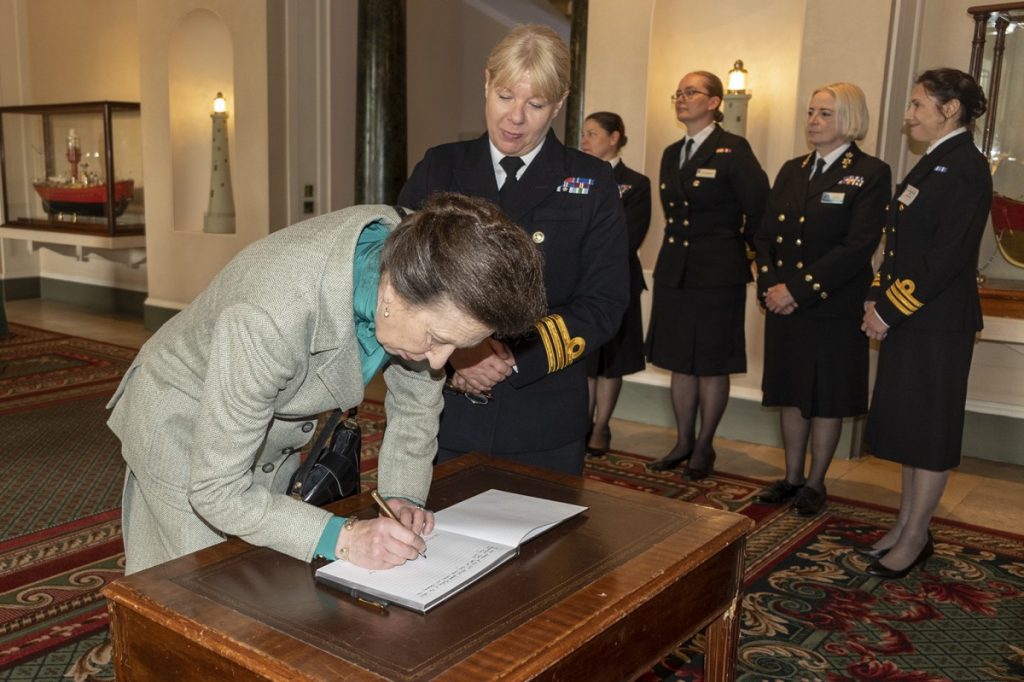
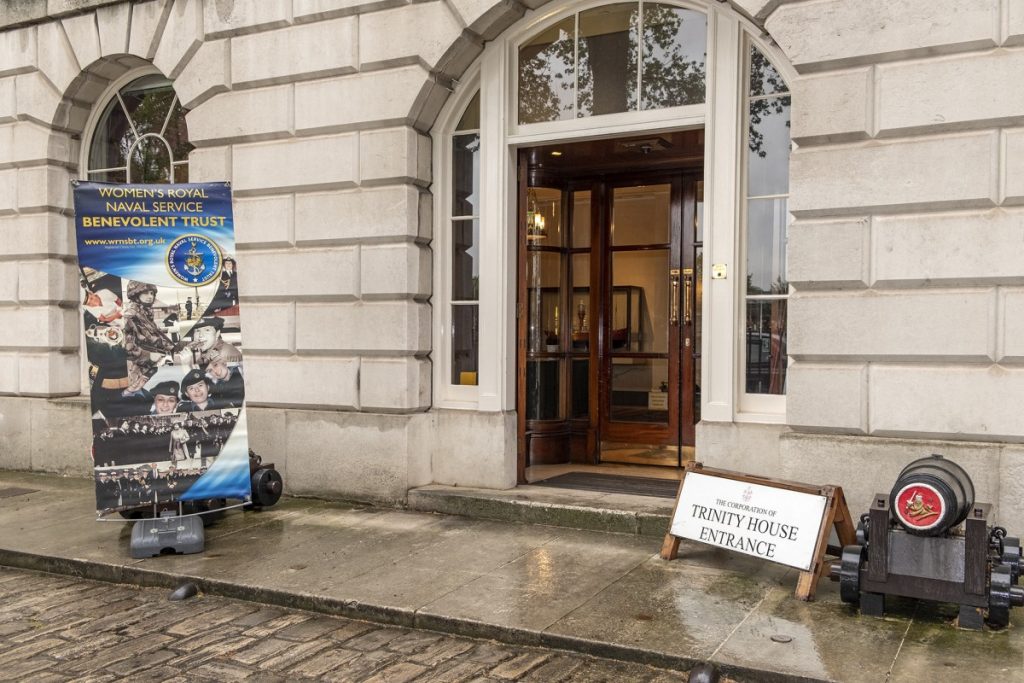
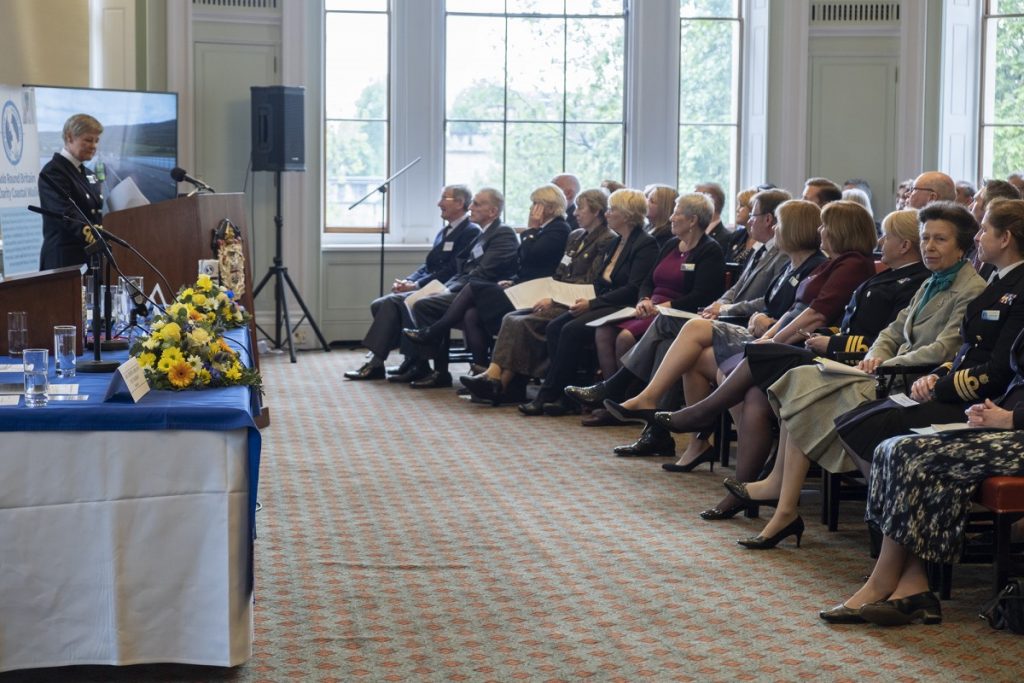
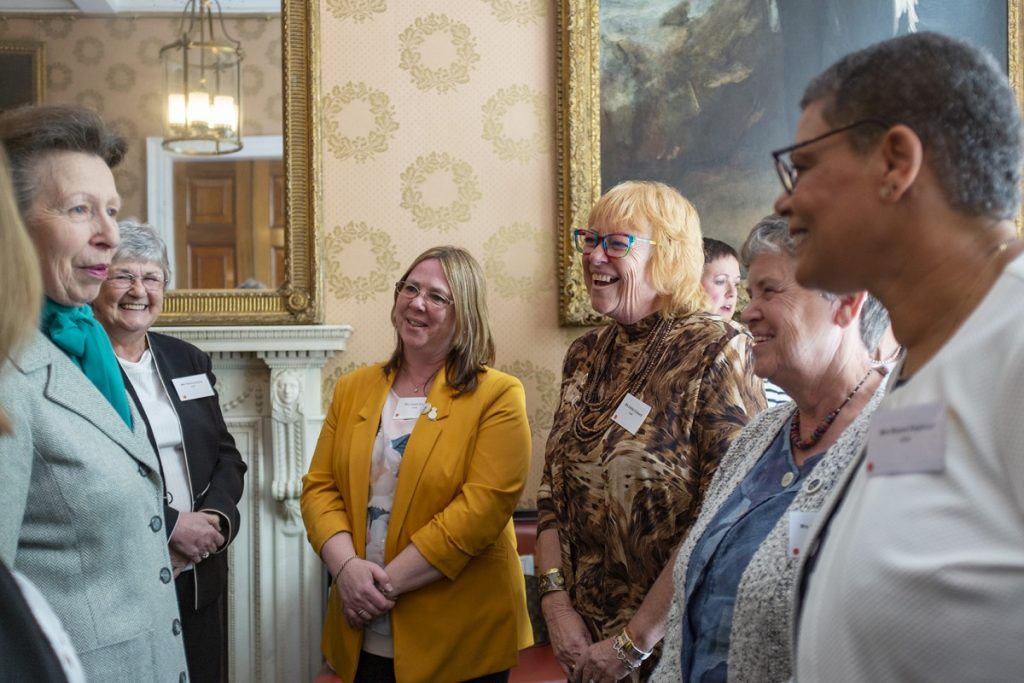
The 77th Annual General Meeting of the WRNS Benevolent Trust was held at Trinity House, London on 8th May 2019.
Guest Speaker
Commander Jane Allen, Royal Naval Reserve
Draft AGM minutes
Opening address
The Chairman, Cdr Heather Rimmer MBE RN, opened the meeting by welcoming Her Royal Highness The Princess Royal, Vice Presidents and Trust Officials, Guests and Members, to the Seventy Seventh Annual General Meeting of the WRNS Benevolent Trust. She said that the Trust was again privileged to use Trinity House for the AGM, and thanked the Deputy Master of Trinity House, Captain Ian McNaught, and his team for their support in making the event possible. At this point, Cdr Rimmer invited Her Royal Highness to address the Honoured Guests and Members.
Her Royal Highness said that she was delighted that those in attendance should find themselves back in the magnificent setting of Trinity House, with the opportunity to build on the success of the 2017 Annual General Meeting (which had been held at Yeovilton), in allowing further members to attend who were unable to travel to Portsmouth. On this occasion, some 25 guests were attending the annual event for the first time. She said that while social media could be very successful in bringing people together, it was hard to beat personal face to face interaction.
Her Royal Highness said that a year ago the Trust and its members were basking in the unequivocal success of WRNS100, and the memories of a full-on year of commemoration and celebration. One of the principle aims of WRNS100 had been to remind the wider community of the continuing work of the Trust and the Association, who work together for mutual benefit; this would be continued with the advent of the Association’s own centenary in 2020. Plans were well in hand for another round of commemorative events.
Her Royal Highness said that after the excitement of 2017, the Trust had seen a return to business as usual in 2018, dispersing over £275,000 in grants to individuals, fuller details of which were available within the Annual Report. Market fluctuations caused by Brexit and other world events resulted in a slight drop in the value of the Trust’s portfolio, but overall its financial position remained very healthy. Once again, an increasing number of legacies had been bequeathed to the Trust; £133,531 had been received during 2018, with a further £291,000 pending in the pipeline at year end. Her Royal Highness said that it was likely that the unique bonding and camaraderie forged within service could encourage individuals to help and support others, and what better way to do this than through a generous donation.
Her Royal Highness said that the Trust’s staff had been undertaking cybercrime and safeguarding awareness training. This would help to ensure that the Trust remained compliant with mandated legal requirements, and alert to any threat that could damage or undermine its aims. A significant amount of work had been done to implement the requirements inherent within the General Data Protection Regulations (GDPR), with the aim of protecting beneficiaries. These undertakings were all representative of good governance and should give confidence that the Trust was run entirely appropriately.
As always, the staff continued to field a multitude of enquiries from members, their families, concerned friends and good neighbours, providing information and advice stretching from state benefits to service records, friendship visits and nursing/care homes. It was considered rare for staff not to be able to find an answer in their urge to assist, or ably signpost the individual to the correct authority.
Her Royal Highness said that the Trust’s staff, and ever growing team of Ambassadors and supporters, had continued to promote the work of the Trust within their local communities, whether through direct or indirect fundraising, presentations, or by representing the Trust at both local and national events. As an outstanding example, on the longest (and very hot!) day of 2018, former Wren Liz Brown had cycled her Longest Ride on a loop through the New Forest, covering 154 miles and spending 15 hours in the saddle. She had raised £1,400 for the Trust.
Her Royal Highness said that she was particularly looking forward to hearing from today’s guest speaker, Cdr Jane Allen, RNR. Cdr Allen had retired from the service in December 2017, and was now part-way through a Solo Around Britain Charity Coastal Walk of 5,500 miles, to raise money for both the Trust and the Royal Navy and Royal Marines Charity (RNRMC). She said it was fair to say that Cdr Allen could probably write a book about her ‘adventure’, which had thus far been far from straightforward. She said that she was sure that the audience would agree that Cdr Allen epitomised an indomitable spirit and will to succeed – and all for the benefit of others.
In conclusion, Her Royal Highness said that it was clear that the Trust remained as relevant and important as ever. While the number of applications for assistance were naturally reducing, the cases themselves were often increasingly more complex. The trends predicted in the 2015 Actuarial Review were still spot on, and the mechanism would be refreshed further in 2020. This would ensure that the Trust remained on track, and that Trustees could continue to make decisions based on fact and evidence. She said that every single contribution continued to count, and that the success of the Trust in meeting its objectives could not be achieved without the support as represented by those within the audience. Her Royal Highness gave thanks for that unstinting support, safe in the knowledge that it would continue.
The Chairman thanked Her Royal Highness for the close interest that she had always taken in the WRNS Benevolent Trust, and for the kind words of her address. She introduced the other people on the platform: Cdr Catherine Jordan, RN (Vice Chairman); Mrs Sarah Ayton (General Secretary); Cdr Liz Walmsley, RN (Governor and Honorary Treasurer); and Cdr Jane Allen, RNR, the Guest Speaker.
Cdr Rimmer said that she sadly had to report news of the death of Mrs Rosie Hancock, who had passed away just before Christmas 2018. Mrs Hancock had been a well-known figure and a stalwart member of the Trust, having been a Governor from 2003 to 2010, and a member of the Finance Committee from 2003 to 2016. Cdr Rimmer said that it was entirely appropriate that the minutes of this meeting should mention her passing, and record most grateful thanks for her significant contribution to the Trust.
Minutes of the 73rd annual general meeting
Cdr Rimmer reminded members present that the minutes of the last meeting held on 3 May 2018 had been circulated for approval. After asking for their agreement and receiving no objections, the Chairman signed the minutes.
Annual report and statement of accounts
Cdr Rimmer presented the 77th Annual Report of the WRNS BT on behalf of the Central Committee. She went on to highlight the most significant points.
During 2018, the Grants Committee had made grants to 209 beneficiaries, including 16 residing overseas. This reflected a drop from 231 in 2017. This said, the total value of regular and one-off grants had come close to budget at £275,449. The decrease in applications was not considered significant and was in line with the forecast from the actuarial reviews which had taken place in 2010 and 2015.
Looking at grants expenditure in more detail on page 6 of the report, Cdr Rimmer said that the overall value of Weekly and General Amenity Grants issued in 2018 was broadly similar to that of 2017. The small increases made in 2017 in the value of the Weekly Maintenance Grant to £25 per week, and in the Weekly Support Supplement to £30 per week, continued to be much welcomed. The individual value of these grants compared favourably with those provided by similar charities. The flexibility of the Weekly Support Supplement, which may additionally be used as a temporary measure where an individual’s circumstances are expected to improve, remained particularly effective. Similarly, the one-off General Amenity Grant continued to prove a useful tool, with the number of its regular recipients remaining steady at 31.
With the exception of Regular grants, the two highest areas of spend were £29,000 on Disability Aids, and £14,000 on helping towards emergency clearance of Priority Debt. While the latter particularly stood out, being twice as high as 2017, over half of this was used to clear Rent Arrears when eviction was imminent, including one very exceptional case where an elderly and infirm husband was left stranded overseas with limited income, when his wife, a former Wren, was unexpectedly moved into dementia care. In a separate case, the Trust was also able to meet a sum owed to permit the South African husband of a former Wren Indefinite Leave to Remain in the UK. This couple, married since 1964, first met when he was serving in the South African Navy, and the Trust considered this to be a debt worthy of exceptional consideration – especially as he continued to act as his wife’s primary carer. Cdr Rimmer emphasised that assistance with debt clearance invariably related to unavoidable circumstances, and not a careless, irresponsible or frivolous lifestyle. Where time allowed, and most certainly in cases of Secondary Debt, applicants were referred for debt management and advice, to bodies such as SAIL, StepChange and the CAB – a practice responsibly reflected throughout the service charity sector. Further examples of the support that the Trust had provided could be found at pages 9 to 11 of the report, and included help towards Rent Deposits, and purchase of basic Household Items, such as mattresses and white goods. Returning to Disability Aids, Cdr Rimmer recalled one particularly touching story from a lady who had been helped with what she termed her ‘age-friendly’ bathroom – this lady had put her kettle on for the day, while a procession of friends called around to see her new facility.
The Trust had increased its maximum one-off grant to £4,000 in January 2016. While 9 such grants were approved during 2018, 5 were subsequently abated when the Trust successfully almonised with other charities, very effectively sharing the cost.
Cdr Rimmer drew attention to expenditure in relation to Education grants, which had doubled since 2017. This continued to reflect an item of support specifically referred to in the Trust’s Royal Charter, aimed at those wishing to retrain in order to be better able to support themselves and their dependent families.
The number of applicants approaching the Trust for the first time had reduced to 49, against 55 in 2017, but compared favourably with the 49 also assisted in 2016. Returning applicants numbered 67, an increase from 57 in 2017, and closer to that of 71 in 2016.
Cdr Rimmer said that in administering grants during the second half of 2018, the Grants Committee had trialled meeting every fourth week, with new delegated authorities put in place for both the Grants Chairman and the Grants Administrator. This new arrangement had worked well, with urgent cases continuing to be considered out-of-Committee, ensuring that beneficiaries received prompt assistance. The practice had now been made a permanent arrangement.
Cdr Rimmer drew attention to the graph on page 8 of the Report, which depicted the age breakdown of those that the Trust had helped over the last 3 years. It showed that the Trust continued to help a significant number of ladies in their 90s, while the number of younger ladies requiring assistance also remained steady – she said it was likely that many of these would continue to require a helping hand from the Trust. Cdr Rimmer said that the Trustees remained confident that the Trust’s Strategic Plan, which was based on the Actuarial Review of 2015, continued to be well founded.
At this point, Cdr Rimmer mentioned one lady whom the Trust had both helped and gained significant additional assistance for. A 48 year old former Wren and former RN rating, who served for 9 years (the majority of this time in the WRNS), she was severely disabled and approach had been made through SSAFA to provide a Riser Recliner Chair and an Electric Scooter. Estranged from an unsupportive husband who could no longer cope, this lady had two dependent children at school and college, who were doing their best to physically assist her. The Occupational Therapist’s Report, accompanying SSAFA’s well prepared case for assistance, also mentioned need for an Adjustable Bed and a Bath Cushion, which had been denied our lady by the public authorities. The Trust had sought and gained additional funding from both the Royal Naval Benevolent Trust and The Royal British Legion, who met the cost of the chair and scooter (around £1,800 each), while our Trust funded both the bed and bathing aid at just over £2,000. Suffering from depression, isolation and insomnia, in addition to her severe physical challenges, the Trust was aware that these joint awards had rejuvenated this lady’s life, allowing her fair rest and access to the outside world, restoring her ability to bathe and to resume a satisfying sense of personal pride and dignity.
Cdr Rimmer said that the Trust remained very grateful for the support provided by SSAFA, The Royal British Legion and the Royal Commonwealth Ex-Services League in identifying potential beneficiaries. The casework provided by these organisations could be quite complex, especially when involving younger applicants. The Trust’s Grants Administrator undertook significant background research and additional communication to ensure that the Grants Committee had all of the information they needed to make the right decisions. The reduction in the number of cases received now allowed much more time and care to be spent on current and potentially wider needs.
Cdr Rimmer said that the Trust continued to work closely alongside other service charities while sharing outreach opportunities, and it was good to see so many representatives in the audience from organisations which offered support, and helped make the work of the Trust possible. The Trust was most grateful for the support of all those individuals and organisations mentioned on pages 14-16 of the report.
The Chairman said the Trust remained very appreciative of those who remembered the charity in their wills, and details of the many generous Legacies and In Memory Donations received were provided at pages 15-16; she said that the Honorary Treasurer would give wider mention in her report.
Cdr Rimmer also said that the Trust was extremely grateful to the members of the Association of Wrens for all that they did on its behalf, including fundraising and putting people in touch. Details of totals raised for the Trust by the Association’s Branches and Informal Groups were also shown at page 16 of the report.
Cdr Rimmer said that the Trust was often asked by family members if a contact could be provided for those feeling socially isolated; the Trust’s rapport with the Association of Wrens came to the fore on these occasions, with referrals quickly made and contacts often established by its local branches and groups.
Cdr Rimmer said that along with other former Wrens, she was very much looking forward to celebrating the Association of Wrens’ Centenary in 2020. Details of special planned events could be found on the Association’s website.
Cdr Rimmer also said that this year’s joint fundraising dinner would be held in the Union Jack Club, following the Association of Wrens’ Annual General Meeting on Friday 13th December.
She gave huge thanks to the WRNS BT Trustees, the members of the Central, Grants and Finance Committees, Ambassadors, the General and Assistant Secretaries, and all the members of the Trust who freely gave of their time to help out at events throughout the year. She then called upon Cdr Liz Walmsley, the Honorary Treasurer, to present the Balance Sheet and Statement of Accounts.
Cdr Walmsley started by saying that from a financial perspective, 2018 had seen mixed financial results for the Trust. Overall, the accounts showed an operating deficit of £77,000 against a planned budget deficit of £232,250, and net losses of £413,000 after investment losses of £380,000. Main sources of income were legacies, dividends and interest from investments, and donations. Looking at each in turn, she advised the following:
(1) Legacies. Income from legacies totalled £133,500, slightly higher than 2017, with 4 receipts exceeding £10,000. By the end of the year, the Trust had also been notified of further legacies in the region of £291,000, relating to 9 estates that had unresolved issues, but action was expected to be completed within 2019. The Trust was always extremely grateful to all those who left such bequests, which made an enormous difference to what it could do.
(2) Investments. Income from legacies could clearly fluctuate from year to year, so dividends from investments remained the most reliable and constant source of annual income. In 2018, investment income had decreased slightly from the previous year, to £141,000, but still provided approximately 51% of monies needed to cover Grants Expenditure. This figure had been helped by the slight increase in interest rates for cash on general deposit, and the Trust regularly reviewed its deposit accounts to try to secure as much benefit as possible.
(3) Other Sources of Income. In memoriam and other donations, at £21,980, had increased against 2017. Fundraising income had increased to £25,415, reflecting the final payment of £15,000 from WRNS100, alongside sums arising from other fundraising events held throughout the year. The latter included Liz Brown’s cycle ride which had raised £1,400; the Cake Sale at HMS COLLINGWOOD, which raised £740.00; and the annual fundraising dinner, which raised £1,100 each for both the Trust and the Association of Wrens.
On the expenditure side:
(1) Grants to Beneficiaries. Grants made to beneficiaries had decreased by 7.8% against 2017 – chiefly through successful almonisation – coming in at just below budget at £275,449.
(2) Investment Management Fees. These had decreased slightly, to £25,000, reflecting reduction in the value of the portfolio.
(3) Other Expenditure. As expected, with the passing of WRNS100 fundraising and publicity costs had decreased during 2018.
Looking briefly at the balance sheet, Cdr Walmsley highlighted that:
(1) The Trust had purchased a much-needed replacement gazebo in 2018, which had resulted in a rise in the overall value of fixed assets.
(2) Despite the bequest of two shareholdings totalling £24,000 in 2018, the value of the Trust’s investment portfolio had fallen significantly due to poor market performance towards the end of the year, with unrealised losses accruing to £380,000.
(3) Taking into account all assets and liabilities, the Trust closed 2018 with unrestricted funds of £3,800,000, representing an overall reduction in value of £413,000 compared with 2017.
Cdr Walmsley said that the Trust continued to hold sufficient funds to meet the anticipated needs of the charity for 2019. As in recent years, the Trustees did not intend to seek any significant external grants for 2019 and, in the unlikely event of a cash shortfall in year, would continue to draw down on its investments in accordance with the Strategic Plan, as based on the Actuarial Review. While on the subject of external grants, and on behalf of the Trust, Cdr Walmsley thanked Trinity House, and specifically Cdr Graham Hockley (due to retire later in the year), for the very generous support given to the Trust over the last 12 years, and to WRNS100 in 2018. She said that the Trust had enjoyed and appreciated the close relationship with Trinity House, and would look forward to it continuing in the future. On behalf of the Trust, Cdr Walmsley wished Cdr Hockley a fulfilling and healthy retirement.
In addition to those already thanked by the Chairman, Cdr Walmsley expressed sincere thanks to the Finance Committee (and Miss Nadia Sutherland, for volunteering as the Trust’s external independent financial adviser); the General Secretary and Grants Administrator for their consistent hard work and support; Mr James New (NatWest bank manager); Mr Robert Woolley from HPH (current auditors); and Ms Miranda Thomson-Schwab, representing the Trust’s investment managers (Brewin Dolphin). Cdr Walmsley also took the opportunity to give a personal welcome to Cdr Jane Allen, and thanked her in anticipation for the amazing amount of money that she was raising for the Trust and the RNRMC. This concluded the financial review and Cdr Rimmer thanked Cdr Walmsley for her report.
Cdr Rimmer stated the annual objectives of the Trust for 2019 were:
- To continue to satisfy the needs of applicants assessed as requiring a grant;
- To review all regular grants on an ongoing basis;
- To review the Trust’s performance against the output of the refreshed Actuarial Review and Strategic Plan;
- To develop further the Trust’s relationship with other Royal Navy charities;
- To build on the increased awareness resulting from WRNS100 in order to further the work of the Trust;
- To implement the General Data Protection Regulation guidelines;
- To implement the replacement (CMS2) Casework Management System;
- To provide continued support for the Victory Walker.
This concluded the presentation of the Annual Report.
Adoption of the annual report, balance sheet and statement of accounts
The Chairman asked Lt Cdr Kath Hutton to propose the adoption of the 77th Annual Report, Balance Sheet and Statement of Accounts as audited for the year ended 31 December 2018. Cdr Maggie Robbins seconded the proposal and the resolution was unanimously carried.
Elections
The Chairman asked those present and eligible to vote (i.e. former Wrens), to approve the list of those persons nominated for office in 2019/20:
All current officers of the Trust were prepared to stand again.
Cdr Andrea Crook (Cdr Rimmer’s predecessor as Chairman of the Trust), had agreed to be nominated as a Vice President. With her extensive time as both Vice Chairman and Chairman of the Trust, it had been agreed that she would be a very valuable re-addition to the team.
All nominations had been earlier unanimously supported by the Central Committee. Cdr Rimmer called upon WO1 Paula Price to propose the nominations for the Central Committee and the Vice Presidents, and the motion was seconded by Mrs Alison Gott. Cdr Rimmer asked for a show of hands from those in the audience who were eligible to vote, and the motion was carried.
Cdr Rimmer also wished to recognise Miss Margaret Connolly, stepping down as an Ordinary Member from the Grants Committee after 10 years’ service. The Trust remained extremely grateful for her hard work and commitment over that period, and wished her well for the future.
Auditors
Before coming to the appointment of the new auditors, Cdr Rimmer wished to record huge thanks to HPH Chartered Accountants. Representing the company, Mr Robert Woolley and his team had served the Trust extremely well over the previous 29 years, and the Trust wished them every continued success.
Cdr Rimmer then called upon Cdre Annette Picton to propose the motion to appoint the new auditors, Gibson Whitter, and this was seconded by WO1 Paula Price. The motion was carried.
Cdr Rimmer also said that Mr Gavin Whitter, from Gibson Whitter, was present in the audience today and welcomed him and his staff to the team.
Guest speaker
With the formal part of the meeting now concluded, Cdr Rimmer introduced Cdr Jane Allen RNR, acknowledging that many would know her from her long Naval career, her tireless work as Naval lead for the WRNS100 Project, or, more recently, as the Victory Walker. Like Her Royal Highness, Cdr Rimmer said that she was greatly looking forward to hearing of Jane’s adventures since she had “set sail” from HMS VICTORY on 21 October 2017, and shared the audience’s relief that she was making a good recovery from her recent accident.
Now just over 18 months into her anticlockwise walk around the UK coastline, Jane was mostly warmly welcomed as she took the podium. She said that just a year ago she had been approaching the Forth Bridge in Scotland, 1,467 miles into her journey since leaving Portsmouth, backed up by her calm, efficient “support crew” – ex-Royal Marine husband, Frank, bringing up the rear, driving their mobile home and meticulously taking care of both logistical and moral support in his enduring calm and caring fashion. Jane had confidently predicted that they would by now have completed their journey, but a series of unpredicted events had hampered progress.
Jane went on to mesmerise the audience with her excellent, from-the-heart delivery, embellished by a superb photographic narrative of her walk to date. Those who read her excellent blog were certainly not disappointed, and by the end of her talk the audience was visibly moved by the clear illustration of her experiences and vital endeavour. Jane said that the key thing that she and Frank had learnt was that every day was different, and however much forward planning was put in place, it invariably had to change. Throughout, conditions underfoot, overgrown paths, route access, inconsistent way-marking, path and road conditions, the weather, and more recently injury, had affected their schedule. “Remaining flexible” had become their motto. Jane said that she was often asked the question, “Why?” Simply put, as she had already previously walked across the country from west to east, and the country’s length from John O’Groats to Land’s End, there was only one way to go – all the way around. She had had ambition to undertake the walk since 2010, but other events had got in the way – an emergency appendix operation, and an operational tour in Afghanistan, to name but two.
Jane said that her two chosen charities had easily selected themselves; firstly, the WRNS BT because of her involvement with the WRNS100 Project in 2017, and secondly, the RNRMC, as she had spent so many years working with today’s Royal Navy – and, tongue in cheek, the choice had to include the Royal Marines, otherwise husband Frank may have decided to stay at home! Preparation had included the sale of their own house and a move into married quarters, and acquisition of a suitable support vehicle. Six weeks before departure date, the “Victory Van” was purchased – as with all the to-be-incurred cost, this motorhome entirely self-financed, with no charitable input. In the run-up to the departure date, Frank worked hard getting the new vehicle equipped, badged up and stocked ready for deployment, while Jane finished off her final serving days in the Fleet HQ. Included in the hold were 185 Ordnance Survey maps and 5 pairs of walking boots, among all the accoutrements which would otherwise have been befitting of Robinson Crusoe.
Jane related her many adventures en route, and had been struck by the immense generosity of well-wishers and offers of hospitality along the way. Sea Cadet units had proved to be and continued to be, the staunchest of allies, while Morrisons supermarkets had offered incredible support, from permitting overnight parking in their car parks, to cash donations and the occasional free meal. Individual veterans, including members of the Royal Naval Association, Association of Wrens, Royal Marines Association and The Royal British Legion, among others, had also proved most helpful; again, whether by providing facilities for overnight parking, replenishment of fresh water, an external electricity source, or an assortment of home-baked goodies. Jane said that she and Frank had spent quite a few nights parked by lifeboat stations, or among boats at marinas, and the Caravan and Motorhome Club had very kindly waived their fees during their Scottish travels. Jane was particularly pleased to welcome Mr Sean Fellows (Regional Manager East Anglia, Morrisons), Mrs Sheryl Rumble (Community Champion, Morrisons), Cdr James Nisbet VR RN (Area Officer, London Area Sea Cadet Corps), and Mr Grenville Chamberlain OBE (Chairman, Caravan & Motorhome Club) to today’s meeting – each were proving to be absolute stars.
Jane made it clear that it was people as well as places, that were making the Victory Walk so memorable for her; from the many inspiring young Sea Cadets, seasoned resident veterans at the Erskine Nursing Home (on the outskirts of Glasgow – the home part-funded by the RNRMC), to the general public and service veterans of all ages. All of these had provided high points along the way, but Jane’s lowest points were when she incurred unexpected injury; firstly, 2,000 miles into her journey when she was in northernmost Scotland and suffered tendonitis in her lower right leg. While standing in the cold sea proved excellent therapy, an extended rest period of 8 days was necessary, and Jane had felt this upset her momentum somewhat. Taking some 37,000 steps each day, her feet were certainly suffering also, enlarging so that today she was able to report that her most comfortable walking boots were a size 9 (right) and a size 9½ (left). Jane felt though that she could not blame her limbs for her second accident; when walking the Pembrokeshire Coastal Path this past February she fell, resulting in dislocation and damage to a shoulder. With no one in visual sight, and in excruciating pain, she made her way to the nearby Valero Refinery (Milford Haven), where Mr Ray Scott, a Fire Protection specialist, proved his worth as a guardian angel. Jane was also particularly pleased that he was present at today’s meeting.
While this serious setback had sapping impact both physically and morally, Jane also suffered huge frustration time-wise, and it was 5 interminable weeks before she could start any physiotherapy, or gentle exercise. An overall hiatus of 9 weeks resulted in Jane returning to the road at a necessarily lesser pace, rebuilding her confidence, fitness and stamina all over again. On resumption, she was walking only 5 miles per day instead of a previous 15 or so, but at time of presentation she was back up to around 10.
On closing after her most moving and inspirational talk, Jane said that she had thus far travelled 4,462 miles, and had reached Llandmadoc, on the Gower peninsula. She was now looking forward to emerging from Wales, and commencing the final leg around the South West of England, calling at the various Naval establishments, before a final spurt to Portsmouth. She hoped that the final leg of her journey would see an upsurge in contributions, which would ultimately benefit the WRNS BT and the RNRMC. Certainly, every penny will have been hard-won by this modest, determined and selfless lady.
Vote of thanks to guest speaker
Cdr Rimmer called upon Lt Cdr Jane Pizii to give the vote of thanks to the speaker.
Lt Cdr Pizii said it was a great privilege to give the vote of thanks, in full expectation that Cdr Allen would achieve her monumental aim of completing her around-Britain coastal walk of 5,500 miles. Given Cdr Allen’s Reservist background, Lt Cdr Pizii added infectious humour to her thanks with an inventive play on words, incorporating names of various RNR units within her praise.
Conclusion
Cdr Rimmer thanked all those present for attending the AGM. This concluded the formal part of the proceedings.