2016 AGM
WRNS BT Annual General Meeting 24th May 2016
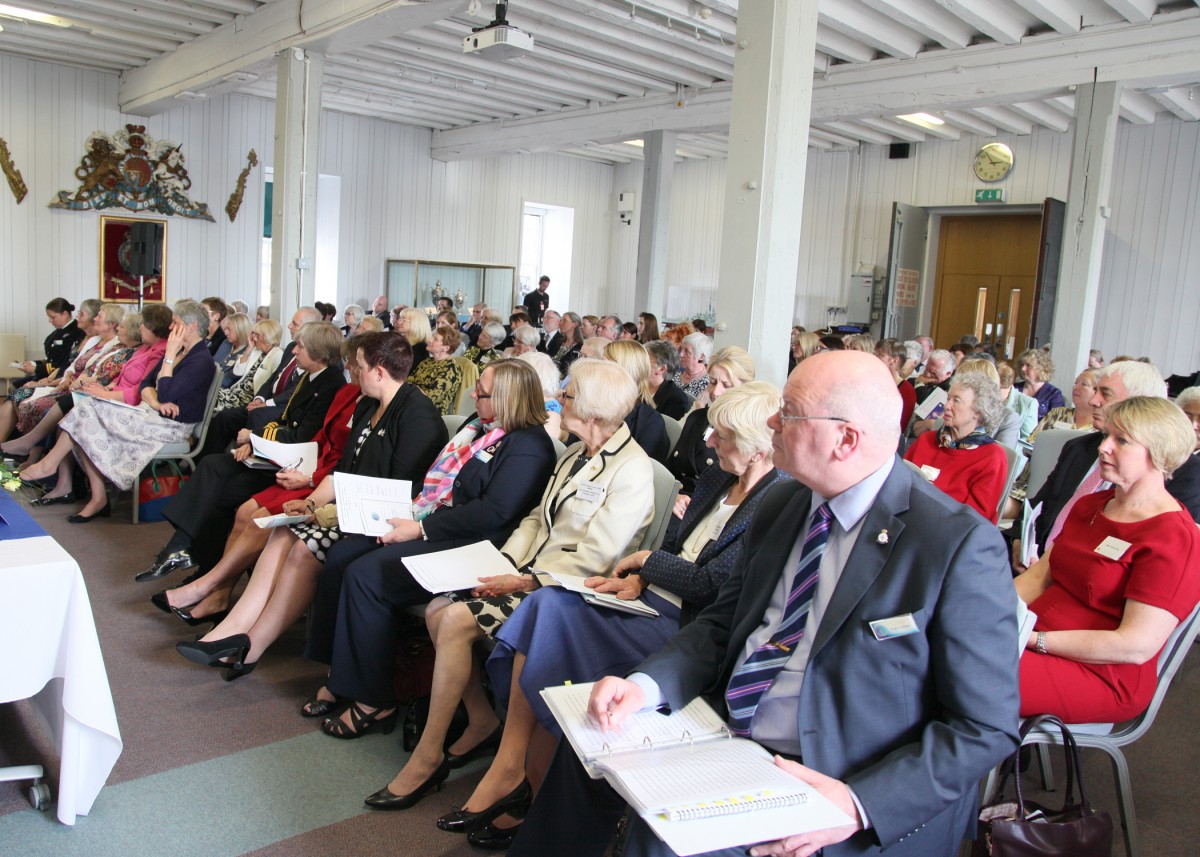
The 74th Annual General Meeting of the WRNS Benevolent Trust was held at National Museum of the Royal Navy, Portsmouth on 24th May 2016.
In the presence of
HRH The Princess Royal
Patron, Women’s Royal Naval Service Benevolent Trust
Guest Speaker
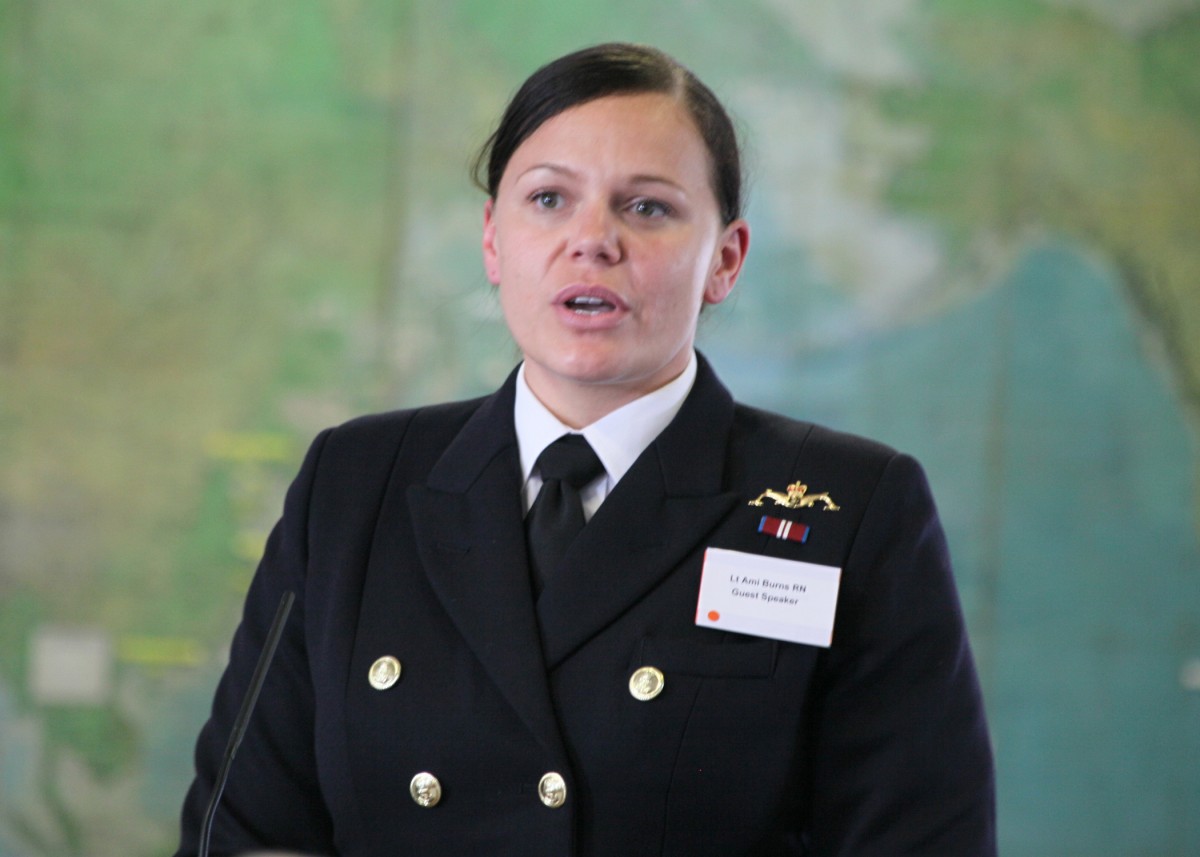
Lt Ami Burns RN

Opening remarks
The Chairman, Cdr Andrea Crook RN, opened the meeting by welcoming Her Royal Highness The Princess Royal, Vice Presidents and Trust Officials, Guests and Members, to the Seventy Fourth Annual General Meeting of the WRNS Benevolent Trust. She said that it was again a privilege to hold the meeting at the National Museum of the Royal Navy, and the Trust was most grateful to the Director General, Professor Dominic Tweddle and his team for making this possible. She also thanked the Museum for its kind offer to allow free entry to its new exhibition, Jutland 1916, later that afternoon.
On a sad note, Cdr Crook said that the Trust had learned of the death of Dame Marion Kettlewell during April, at the grand age of 102. Dame Marion had joined the WRNS in 1941 and enjoyed a long and prestigious career. Her first duties had included the challenge of driving in wartime London. Then, in 1942 after 3 weeks of officer training at Greenwich, she was sent to HMS TERN, a naval air station in the Orkneys as the Quarters Officer. She subsequently returned to Greenwich to fill a similar post. Shortly before D-Day she was sent to Ipswich, one of the assembly points for landing craft. Later, as a Chief Officer, she served in the Admiralty, on the staffs of the Commander in Chiefs Plymouth and Portsmouth, and Flag Officer Reserve Aircraft, before spending a period in charge of WRNS Officer Training at RNC Greenwich. On promotion to Superintendent she was appointed to the Staff of Flag Officer Naval Air Command, and then to HMS DAUNTLESS. She served as the Director WRNS from 1967. Awarded the CBE in 1964, she was made a Dame of the British Empire on retirement from the service in 1970.
Always one to speak her mind, Dame Marion was interested in the impact of war on the emancipation of women, and general social attitudes towards unmarried mothers. In the 1960s she considered the Navy’s recruiting problems; the attitudes within the WRNS towards the mixing of men and women; and the question of whether Wrens should serve at sea. Her memoirs are on record at the Imperial War Museum.
In retirement, Dame Marion, as one of the Trust’s Vice Presidents, continued to take a close interest in its activities, and also served as President of the Association of Wrens from 1981 to 1992. Faced with increasing infirmity, Dame Marion was nevertheless able to attend the Association of Wrens AGM in London in October 2014, and she continued to keep in contact with both the Association and the Trust until very recently. A lady of great character, she will be very sadly missed. At this point, Cdr Crook invited Her Royal Highness to address the Honoured Guests and members.
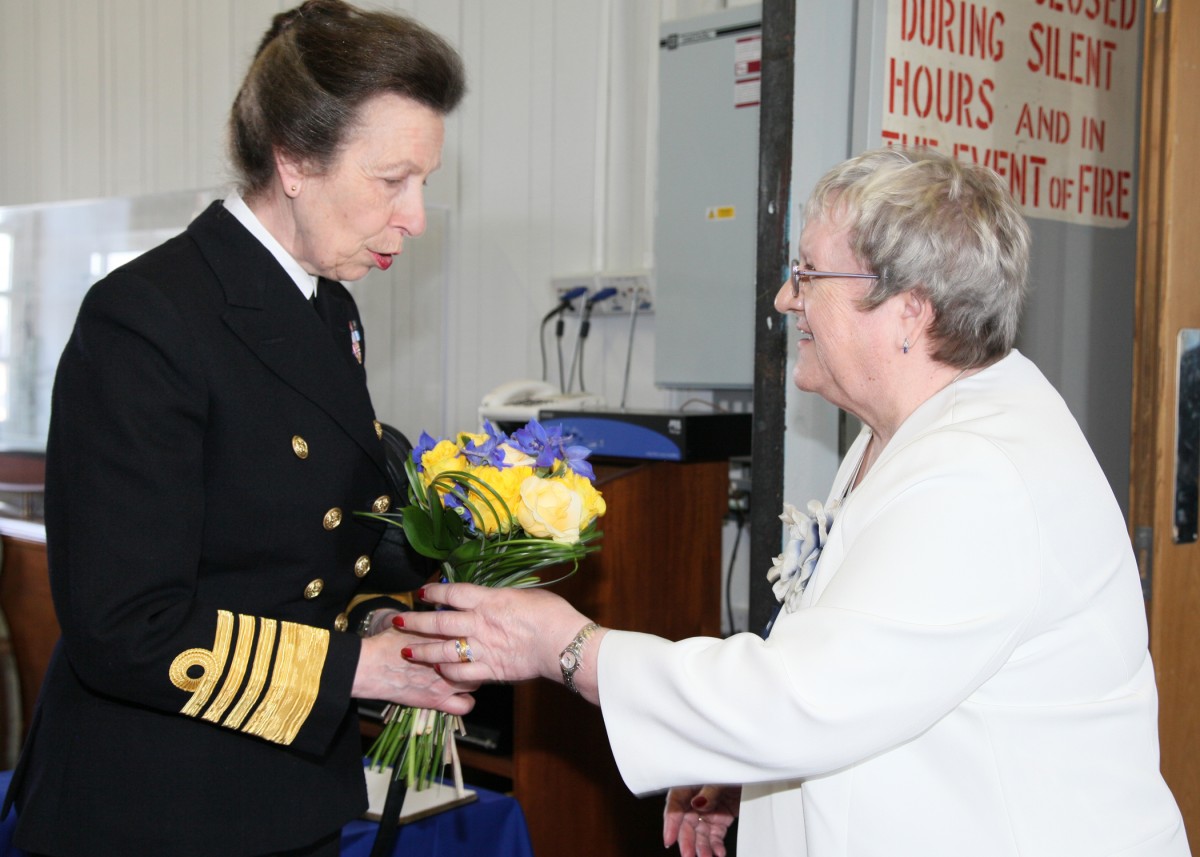
Following on from the Chairman’s words about Dame Marion, Her Royal Highness said she herself had had a personal connection with her. It was following the death of the Trust’s first Patron, Princess Marina, Duchess of Kent, that Dame Marion advised her own successor as Commandant WRNS, Dame Daphne Blundell, to approach Her Royal Highness to become Patron of the Trust. The rest is history.
Moving on, Her Royal Highness said that the present time was a period of significant naval anniversaries. She had that morning been delighted to attend the commemoration event to mark the 75th anniversary of the tragic loss of HMS HOOD; the unveiling of HMS HOOD’s ship’s bell; and to open the Jutland 2016 exhibition within the Historic Dockyard. She hoped that some of those present would take up the Museum’s kind invitation to visit the exhibition later that day.
Her Royal Highness said that 2017 would be the turn of the WRNS to mark its own significant anniversary. Its Centenary would offer the opportunity to both commemorate the work of the WRNS and to emphasise the key role that women continue to play in the Royal Navy of today.
She observed that the Royal Navy was lending its support to the WRNS100 project, providing leaflets and other PR material, while the First Sea Lord had kindly allowed the planned WRNS100 reception to be included as one of the 5 Naval events held each year at the Old Royal Naval College, Greenwich. There would also be an exhibition at the National Museum of the Royal Navy. Although most events would be self-funding, money was being raised to fund both a memorial stone and cover peripheral costs.
Her Royal Highness said that the Centenary would offer an opportunity to both celebrate with friends and former colleagues, and at the same time publicise the continuing work of the Benevolent Trust. The work of the Trust remained as important and relevant as ever, and it was crucial to ensure that former Wrens, and their friends and families, knew where to get help if our ladies should need it, from financial assistance through to simple companionship.
Her Royal Highness said that over the past 5 years, the Trust’s Central Committee had been monitoring the charity’s performance against the outcome of the 2010 Actuarial Review of the former-WRNS population. In 2015, the Trust had decided that it was the right time to undertake a refresh of the original Review, to provide a confidence check on the figures. This refresh had served to confirm the accuracy of the original assumptions, with both the number of beneficiaries and the level of grant-funding provided demonstrating a close correlation between projected and actual figures. With the Trust’s youngest eligible member now aged 40, there would be continuing need to support the 40,000 members of the Trust for some time to come.
Her Royal Highness said that the success of the Trust in meeting its objectives continued to involve many individuals, whether by manning stands at events around the country, fundraising, setting up Facebook groups or Twitter accounts, or simply writing letters and making endless phone calls. Without the support of people like those present today, the Trust could not be the success it was.
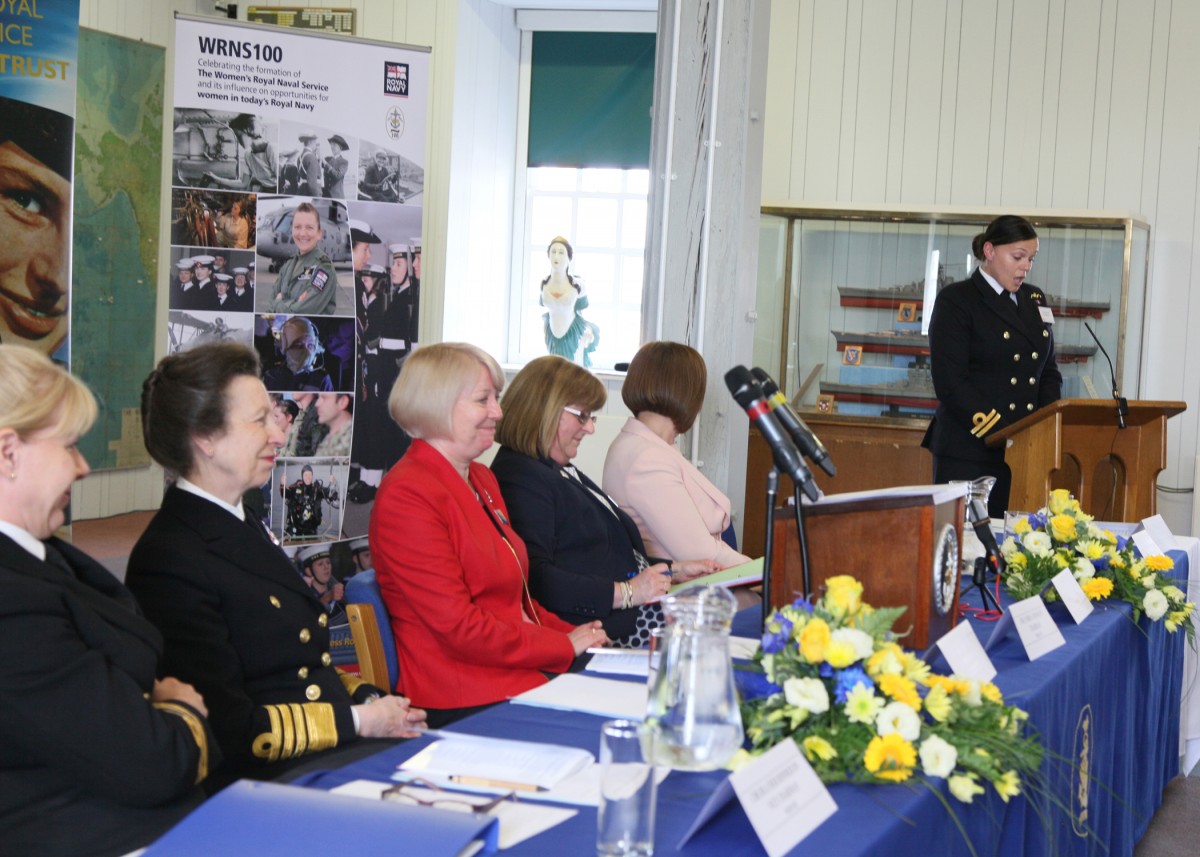
The Chairman thanked Her Royal Highness for the close interest that she had always taken in the WRNS Benevolent Trust, and for the kind words of her address. She introduced the other people on the platform – Cdr Heather Rimmer RN (Vice Chairman); Mrs Sarah Ayton (General Secretary); Cdr Liz Walmsley RN (Governor and Honorary Treasurer); and Lt Ami Burns RN (HMS SULTAN/HMS VICTORIOUS-desig) (Guest Speaker).
Cdr Crook said that apologies for non-attendance had been received from 2 Trustees: Cdre Annette Picton RN, and Mrs Barbara Hines.
Minutes of the 73rd annual general meeting
Cdr Crook reminded members present that the minutes of the last meeting held on 15 May 2015 had been circulated for approval. After asking for their agreement and receiving no objections, the Chairman signed the minutes.
Annual report and statement of accounts
Cdr Crook presented the 74th Annual Report of the WRNS BT on behalf of the Central Committee. She went on to highlight the most significant points.
2015 had been another busy year for the Grants Committee, which had continued to meet fortnightly to ensure that beneficiaries received prompt assistance. A total of 236 members had received financial help, including 15 residing overseas. This showed an overall drop from 286 in 2014, and there had been a commensurate decrease in the total value of regular and one-off grants, from £318,304 in 2014, to £281,320 in 2015. The decrease in numbers was not considered significant, and was in line with the Actuarial Review. It did though demonstrate how important communication was in reminding people that the Trust was there to help.
Casework provided by SSAFA and the Royal British Legion was often complex, especially in relation to younger applicants, and the Trust’s Grants Administrator undertook much background research in advance of meetings to ensure that the Grants Committee had all the information they needed on which to base their decisions. In response to the gradual reduction in potential beneficiaries, the Grants Committee was now, during 2016, trialling meetings at three-week intervals rather than fortnightly, with the flexibility and facility to consider cases out-of-committee where speed was of the essence.
Turning to actual expenditure, shown in more detail on page 6, there had been a small decrease in the overall total value of Weekly and General Amenity Grants issued, to £209,371; this was commensurate with the expected natural reduction in the number of beneficiaries. After regular grants, the next highest spends were £21,486 on Medical Aids; £10,976 on Household Repairs; and £10,161 on Priority Debts and Arrears.
Over the past 12 months funeral expenses had continued to rise dramatically, so that even the most basic funeral cost averaged at around £3,700. The Trust was finding that many of its beneficiaries had failed to make any provision for their funerals, or had perhaps used savings otherwise set aside for other necessities; even where insurance policies were in place cover often fell short. Some individuals believed that the State would meet full cost if they could not, and surviving family members, themselves often retired, disabled or with young families, were unable or simply reluctant to assist. Although the Trust was one of a small number of charities which elected to make above average grants towards such costs, the charity encouraged beneficiaries to plan ahead. The Trust had provided nearly £8K in 2015 to assist with such costs, and already this year (2016), related grants of over £9K had been disbursed.
Expenditure on Education Grants reflected the support provided, in accordance with the Trust’s Royal Charter, to those who wished to retrain in order to be better able to support themselves, whether educationally or professionally. An example of this could be found at page 9 of the Report.
The number of applicants approaching the Trust for the first time had again reduced, down to 58 from 74 in 2014, and the number of one-off grant applications approved reduced to 94, down from 139 in 2014. In contrast, 3 Maximum Grants were awarded during 2015, down from 7 in 2014.
The Maximum Grant that may be awarded in any one case had been set at £3,000 since 2006, and in Autumn 2015 the Trust’s Central Committee had approved an increase to £4,000 from January 2016. This was in recognition of the fact that some of the costs for which charitable assistance was requested were increasing at a faster rate than inflation; as previously mentioned, this included the no-frills funeral. Although every case would continue to be considered on its merits, the increase in the Maximum Grant now provided the Grants Committee with enhanced flexibility when considering assistance.
The graph on page 8 depicted the age breakdown of those the Trust had helped over the past 3 years. This showed that the Trust continued to help a significant number of ladies in their 80s and 90s, and a good number from those in their 40s and 50s.
The Chairman drew attention to one lady whom the Trust had been helping over the last 2 years – her family’s plight had been narrated in a national newspaper. This 42 year old mother of 3 was married to a former RN rating, now aged 44, who had been suffering from early onset dementia for a number of years. He could no longer speak or do anything for himself. The distress to the young family caused by the “long goodbye” that is often affined to dementia, could only be imagined by outsiders. This husband and father had initially been placed in a care home in Scotland. Working together and with SSAFA’s support, the WRNS BT, RNBT and RN&RM Children’s Fund provided grants to meet the cost of the family’s travel and subsistence to visit him over an extended period. Thankfully, he was now in a second home, relatively local to his wife and children. The Trust had also provided further regular financial support by way of a General Amenity Grant of £600 per annum, and Children’s Christmas Gift grants totalling £150. The RNBT and RN&RM Children’s Fund also stood ready to offer further help.
Extracts from letters of thanks from beneficiaries and families could be found on pages 9-10 of the Report, and inside the back cover.
The Chairman said that the Trustees remained confident that the Trust’s strategic plan, based on the refreshed Actuarial Review, was well founded. However, it was clear that financial pressures would continue to impact on local authorities and the level and kind of care support that they could provide; including the provision of beds in care homes. The Trust therefore stood ready to take early action to ease any impact on its beneficiaries wherever possible.
Cdr Crook said that the Trust continued to work closely alongside the other Naval Charities, sharing outreach opportunities, and it was good to see today many representatives from organisations which offered support, and helped make the work of the Trust possible. The Trust was most grateful for the support of all those individuals and organisations mentioned on pages 13–18.
The Chairman said the Trust remained very appreciative of those who remembered the charity in their wills, and details of the generous Legacies and In Memory Donations received were provided at pages 14-15. Cdr Crook emphasised that these donations made such a difference to the work of the Trust.
The Trust was also extremely grateful to the members of the Association of Wrens for all that they did on its behalf, including fundraising and putting people in touch. Details of the totals raised for the Trust by the Association’s Branches and Informal Groups were at page 14. Cdr Crook said the 2016 joint fundraising dinner would be held in the Union Jack Club following the Association of Wrens Carol Service on Saturday 10th December.
Looking further ahead, and as the Trust’s Patron had already mentioned, Cdr Crook said that the Trust was working alongside the Association and the Royal Navy on the plans to mark the 100th Anniversary of the formation of the WRNS in 1917, and the continuing role of women in the Naval Service of today. She also took the opportunity to thank the RNRMC for the financial support that it had provided to this project.
Cdr Crook gave huge thanks to the WRNS BT Trustees, the members of the Central, Grants and Finance Committees, Ambassadors, the General and Assistant Secretaries, and all the members of the Trust who freely gave of their time to help out at events throughout the year. She then called upon Cdr Liz Walmsley, the Honorary Treasurer, to present the Balance Sheet and Statement of Accounts.
Treasurer’s report
Cdr Walmsley started by saying that from a financial perspective, 2015 had been a year of mixed blessings for the Trust. Overall, the year had ended with an operating deficit of £5,000 against a planned budget deficit of £289,000. She explained that the Trust had 4 main sources of income: legacies, interest from investments, grants from other charities, and donations.
(1) Legacies. Legacy income would clearly be expected to fluctuate from year to year and could not be anticipated; in 2015 it had totalled £210,000 – £119,000 more than in 2014. Four legacies exceeded £10,000 and the largest were for £42,000 and £85,000 respectively. At the end of the year, the Trust had been notified of further legacies to the value of £158,000, and although these estates were complicated, it was anticipated that these funds would be received in the 2016 financial year. The Trust continued to be extremely grateful to all those who left money for the continued work of the charity.
(2) Investments. 2015 had not been such a brilliant year for investments. At £145,000, dividend income came in close to budget; however, investment income fell overall by £5,000 against 2014, reflecting low interest rates for cash on deposit and the general investment market performance. As a result, the year-end value of the investment portfolio fell due to the drop in the market, to £3,462,000, which included unrealised losses of £104,000.
(3) Grants from Other Charities. No major grants had been requested in 2015, although a minor grant was provided from the RNRMC to cover 50% of the cost of the Actuarial Refresh. The Trust had also received a minor grant from Trinity House to cover the cost of the venue for the 2015 AGM.
(4) Donations. Other sources of income had amounted to £54,000. This was largely due to an exceptional in memoriam donation of £15,000, and a rise in fundraising income due to the generous support at the increased number of events in 2015.
On the expenditure side:
(1) Grants to Beneficiaries. Grants made to beneficiaries had fallen by 11.6% to £281,000 in 2015.
(2) Investment Management Costs. These rose from £19,000 in 2014 to £24,000 in 2015, and continued to reflect changes within Brewin Dolphin’s charging structure. These changes were in line with government initiatives so that fees became more transparent and were now charged quarterly, based on the value of the portfolio, whereas previously commission was charged and absorbed within portfolio movement.
(3) Other Expenditure. There had been a number of changes in apportionment within other expenditure categories in light of the latest Charity Commission guidance, to ensure that the Trust complied with relevant regulations. Fundraising and publicity costs rose to £25,000, mainly due to a higher apportionment of the General Secretary’s costs, because she was spending more of her time in organising or taking part in events. In addition, legal costs in relation to legacies were now included in this category, and the Trust necessarily incurred considerable fees to enable the release of funds from a specific, complex legacy. Governance costs also increased to £28,000, and although this seemed a fairly significant increase on the previous year, this was because allocation in this category had been reviewed. Composition was now made up of general legal, audit and accountancy fees, meeting expenses and 25% of the General Secretary’s employment costs (previously 20%).
Overall, taking into account all assets and liabilities, the Trust had closed the year with a balance sheet figure of £3,717,000 – representing a decrease of £113,000 on 2014 (while noting that this included the £104,000 in unrealised losses on the investment portfolio). Nevertheless, the Trust continued to hold sufficient funds to meet anticipated needs, and had again informed both the RNRMC and Trinity House that the charity would not be seeking major grants for the 2016 financial year.
On behalf of the Trustees, Cdr Walmsley expressed sincere thanks to all the organisations and individuals who had donated to the Trust in any way – particularly remembering those who had left the Trust a legacy in their wills. As always, the Trust was extremely grateful to the Dauntless Association, and members of the Association of Wrens, who continued to support the charity through collection boxes, fund raising within their branches, and manning joint stalls at many events throughout the year; also, members of the RNA and all those others who kindly made donations to the Trust. She also thanked the Finance Committee and the Secretaries for their hard work and support, as well as (in attendance) Mr James New, the Trust’s bank manager (NatWest); Mr Robert Woolley from HPH (Auditors); and Ms Miranda Thompson-Schwab, representing Brewin Dolphin (Investment Managers). This concluded the financial review.
Cdr Crook thanked Cdr Walmsley for her report. This concluded the presentation of the Annual Report.
Adoption of the annual report, balance sheet and statement of accounts
The Chairman asked Lt Jane Pizii to propose the adoption of the 74th Annual Report, Balance Sheet and Statement of Accounts as audited, for the year ended 31 December 2015. Cdr Maggie Robbins seconded the proposal and the resolution was unanimously carried.
Elections
The Chairman asked those eligible to vote (i.e. former Wrens), to approve the list of those nominated for office in 2016/17, as supported by the Central Committee. There were no new nominations for Trustees on this occasion. Cdr Crook called upon Lt Cdr Kath Hutton to propose the nominations for the Central Committee and the Vice Presidents, and the motion was seconded by Mrs Ollie Butler. Cdr Crook asked for a show of hands from those in the audience who were eligible to vote and the motion was carried.
Re-appointment of auditors
Cdr Crook called upon Cdr Liz Walmsley to propose the motion to re-appoint the auditors, HPH (as represented at the AGM by Mr Robert Woolley), and this was seconded by Mrs Alison Gott. This motion was also carried.
Conclusion
Cdr Crook said that this concluded the formal part of the meeting.
Guest speaker
Cdr Crook introduced Lt Ami Burns, who had joined the Royal Navy in 2003 as an Artificer Apprentice and was about to re-join HMS VICTORIOUS as a fully qualified Assistant Marine Engineering Officer – the first woman in the Submarine Service to do so.
Lt Burns opened by saying that she was currently serving at HMS SULTAN, where she was in the final stages of training prior to joining HMS VICTORIOUS in order to qualify as a Category A Nuclear Watchkeeper. Once this training was achieved she would become one of the Marine Engineering department’s 5-person management team. She said that in late 2014, she had already been the first female to join HMS VICTORIOUS, and the first female Marine Engineer to become a qualified submariner across the Fleet. While the vessel was on deterrent patrol, she had also qualified in all 5 of the watchkeeping positions.
Lt Burns said that since childhood she had always wanted to become a Marine Engineer in the Submarine Arm of the Royal Navy. In 2003, the local Armed Forces Careers Office had informed her that women would never serve in the Submarine Service – a common expectation at that time. She had found this observation hugely disappointing; since very young, she had wanted to work with nuclear reactors and help provide the nuclear deterrent capability to protect the country in a way that few men, let alone women, were privileged to do. Undeterred, she elected to join the Royal Navy as a Marine Engineering Artificer Apprentice, in the hope that one day the rules would change – as indeed they eventually would. A 10-year journey subsequently took her from being a naïve 18 year old, ably facing all of the inevitable challenges presented to a young woman in her first ship and beyond, and while excelling along the way, up the Artificer General and Submarine Service training ladders, through to qualifying as a Nuclear Chief of the Watch alongside her male counterparts; and then becoming a key instructor to all rates and ranks as an experienced Chief Petty Officer Marine Engineering Artificer in HMS SULTAN, where she was selected for officer training through the Upper Yardman scheme.
Lt Burns joined BRNC Dartmouth in September 2013 – and it was time for her long-held dream to begin to materialise. “Women on Submarines” had been a hot topic for a while, and just like “Women at Sea”, would raise interesting conversation at any service dinner table. Lt Burns observed that historically, where need and demand required it, society and organisations restructured to ensure that the female gender contributed in the same way as the male. Along with women working on the front line, placing women on submarines was considered to be a challenge to breach one of the remaining male bastions within the Armed Forces. During the Second World War, many women, including those of the WRNS, were used to aid in the loading of torpedoes onto British submarines, and this appeared to be the extent of their involvement in the submarine world—with one possible exception. Lt Burns related the story of Sigrid Green, a member of the Women’s Auxiliary Air Force. Norwegian by descent, she was detailed to travel to German-occupied Norway because of her bilingual skills, to conduct listening operations and collect intelligence. The RAF offered to drop her by parachute but she declined, choosing instead to travel on a British submarine. Once on board, she had to pretend that she was a boy and carried false documentation. Having disembarked and completed her mission, she subsequently returned to the UK in the bomb bay of a Mosquito aircraft. Thereafter, she worked at Bletchley Park. Forty years later, in 1985, the Royal Norwegian Navy became the first to allow women to actually serve on submarines, in their diesel-powered Ultra Class. The Royal Danish Navy followed in 1988, followed by Sweden, Australia, Canada and Spain – all in diesel ‘boats”.
In 2001, a 50+page document entitled The Medical Implications of Women Serving in Submarines, was submitted to the US Navy Board. Lt Burns quoted some extracts:
“Using historical data, it was observed that women attended the Medical Bay 2.6 times more than their male counterparts; they are 6 times more likely to suffer migraines than men; and 2.5 times more likely to suffer a personal injury whilst carrying out the same duties…”
“With the introduction of females into the submarine environment, there will be an increased medical liability that these women will bring; the submarine would require additional medical staff for which it has not been designed…”
“Furthermore, with increased medical issues in women, the effect on other crew members having to compensate for this loss is substantial…”
Although there were a few salient points in the report, it was fortunately deemed exceptionally biased, and much of the “evidence” was dismissed when the US changed their own policy in 2009, allowing females officers to serve on Ballistic Nuclear Submarines from 2011.
One important issue raised by the report was with regard to the possible impact of a submarine’s concentrated atmosphere on the female metabolism, with the CO2 element of 1% being over 20 times higher than natural air, and occasionally rising to 3%. This concentration, along with increased radiation exposure, was believed to be harmful to women, especially if pregnant. A subsequent study by the Institute of Naval Medicine however, dispelled this issue. The problems presented by heavy presence of CO2 in a submarine’s atmosphere have now been addressed by the installation of an air-cleaning system (PAVE), which effectively removes the excess CO2, and allows one on board compartment to carry a reduced CO2 level in the event that a female does become pregnant. Subsequently, the restriction of women serving in submarines was lifted in the UK in 2011.
The first females to serve in Royal Navy submarines would be commissioned officers, and they would serve in the Vanguard Class, selected because of the vessels’ accommodation configuration, with 3 officers sharing one cabin. Lt Burns was elated to be able to volunteer for submarines while undergoing officer training at BRNC Dartmouth.
Joining HMS VICTORIOUS in 2014, Lt Burns undertook her Assistant Marine Engineering Officer training in a running boat and gained her “Dolphins” on acquiring the Basic Submarine Qualification. Not being entitled to a cabin at that stage, she was accommodated in the missile compartment along with other female trainees, with modesty preserved only by curtains, and continued to experience the deprivations of life in submarines – including water rationing, limited personal communication with the outside world, and a dearth of “luxury” items, such as “nutty” and biscuits – worth much in trade-off as currency within the boat’s “black market”!
After qualifying on board HMS VICTORIOUS, in 2015 Lt Burns returned to HMS SULTAN to undertake the Nuclear Reactor Course, which would qualify her to act as a Cat A Head of the Watch; at the time of the AGM, the year-long course would be completed in just a couple of weeks’ time. Fully qualified, Lt Burns would then re-join HMS VICTORIOUS, to become the Assistant Marine Engineer Officer responsible for the Nuclear Reactor, an assignment expected to last for 4 years.
Lt Burns has now achieved her initial ambition, her childhood dream. As the first woman to qualify as a Cat A Head of the Watch on completion of the Nuclear Reactor Course, she expects to be followed by further female officers, at least 2 of whom are in the training pipeline. There are an increasing number of female volunteers across all branches requesting to serve on submarines, and at least 12 of these now proudly wear their “Dolphins”. Lt Burns said that she thought herself extremely fortunate to serve at a time when she could realise her dream; to that, we would surely add that the achievement also owes much to her own personal endeavour and achievement.
Lt Burns summed up by looking back at history, observing that women have always made a massive contribution to the Armed Forces, have been inspirational and set precedence for others to follow.
Vote of thanks
The Chairman called upon Lt Jane Pizii to propose a vote of thanks to Lt Burns for her inspiring address.
Lt Pizii said that it seemed very fitting that Lt Burns should speak on this day; over the years, women serving in the Naval service had become no stranger to firsts, and the guest speaker was writing the latest chapter in the history of women now serving in the Royal Navy. She said that the late Dame Marion Kettlewell would have been so very pleased to see the exciting evolution that continued for women in the service, and so close to the WRNS100 celebrations. While advances within the Naval engineering branch were already well embedded in both the General and Fleet Air Arms of the Royal Navy, Lt Burns’ admirable progress into the Submarine Arm’s world of the nuclear engineer specialisation – probably the most complex and demanding of roles – was outstanding. On behalf of those present, Lt Pizii said it was her honour and privilege to thank Lt Burns for her insightful and informative speech, delivered with such humour and aplomb, and wished her well for the bright future that she would clearly have. There was no doubt that Lt Burns would continue to deal with her professional challenges with the intelligence, industry, courage and wit that any “Jenny” would be proud of; all those present would wish to celebrate her success.